 All Deities
 Gift & Worship
 Best seller
 About Us
 Contact Us
 Blogs
Why Do We Celebrate Diwali? Origin Stories Across India
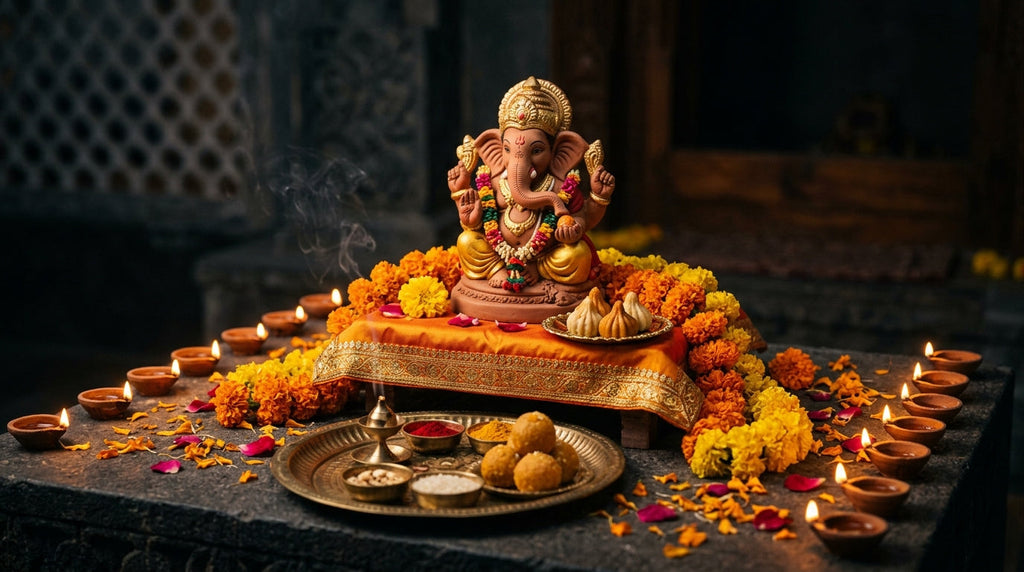
It is said that on the darkest night of the festive season, when the moon does not show its face at all, a whole country quietly decides to answer the dark with one small flame. That night is Diwali. Come, sit close, and I will tell you why.
Diwali is celebrated as the victory of light over darkness, and each part of India tells its own story to explain it. In much of North India it is Rama's return to Ayodhya. In many southern traditions it is Krishna's defeat of Narakasura. Almost everywhere, it is the night of Goddess Lakshmi, while Jains and Sikhs honour their own sacred memories on the same days.
So there is no single "correct" story, and the elders never quarrelled over it. At Dev Tattva, where we make handcrafted murtis for home mandirs, we think of these stories as many lamps on one thali. Let us light them one by one.
Why Do We Celebrate Diwali? The Katha of Rama's Return
Begin with the story most North Indian families tell. Prince Rama of Ayodhya went into the forest for fourteen years to keep his father's word, with Sita and his brother Lakshmana beside him. In the forest, Sita was carried away by Ravana, the king of Lanka. A great war followed, and it ended with the fall of Ravana. This is the tale told in the Ramayana.
Now picture Ayodhya in those last days of waiting. Bharata, Rama's younger brother, had looked after the kingdom for all those years, and tradition remembers that he placed Rama's sandals on the throne as a sign that the true king was only away. The people counted the years, then the months, then the days. Imagine someone climbing a rooftop each evening just to look down the road.
When the exile ended, Rama, Sita and Lakshmana turned homeward. Tradition says Hanuman went ahead to carry the glad news. In popular tellings, the return fell on a new-moon night, so dark that the people filled the streets, rooftops and the banks of the Sarayu river with earthen lamps to light the way. The whole city glowed.

That glow gave the festival its name. Deepa means a lamp and avali means a row, so Deepavali, shortened to Diwali, is simply "a row of lamps."
Look at what the story honours. It is not only a victory in battle. It is a homecoming, the return of dharma to a kingdom that had been waiting for it. Families who wish to keep Rama's presence at the mandir during these days sometimes choose a Ram Lalla murti, and many remember Hanuman, who carries Ram in his heart, beside it.

Krishna, Narakasura and the Dark Before Dawn
Travel south, and the elders will tell you a different story for the same festival. According to the Puranic tradition, there lived a powerful king called Narakasura, also known as Bhaumasura, who ruled the city of Pragjyotisha. Pride had grown in him, as it does in anyone who thinks no power can touch him. He troubled the people and the devas, and he held many women captive, a number the tradition gives as sixteen thousand.
The distressed turned to Krishna. In popular tellings, his wife Satyabhama rode into the battle with him, and some tellings say it was she who struck the decisive blow. Narakasura fell, the prison gates were opened, and the captive women walked out into freedom.
This victory is remembered on Naraka Chaturdashi, the day before the main new-moon night. Families rise before sunrise, take a ritual bath with oil, wear fresh clothes and light lamps while it is still dark. In Tamil Nadu and in many other southern homes, this early morning is the heart of Diwali, and the sweets and the greetings begin before the sun has even risen.
Why before dawn? The elders say the story is about the darkest hour just before light arrives. It is a lovely thought for a child: even a night that feels very long has a morning waiting inside it.
Lakshmi, the Churning of the Ocean and the New-Moon Night
Whichever story a family tells in the morning, by the evening of the new-moon night most of them turn to the same Goddess. Lakshmi is the deity of grace, prosperity and good fortune, and her puja is the centre of Diwali in a great many homes.
Her katha begins with the churning of the ocean, the samudra manthan. The devas and asuras pulled together on the great serpent Vasuki, using Mount Mandara as the churning rod, and many wonders rose from the waters. Among them, according to tradition, came Lakshmi, seated on a lotus. She looked over the assembly and chose Vishnu, placing a garland around him.

Here the traditions differ gently, and it is good to say so. Some families remember Diwali as the day of Lakshmi's appearance from the ocean. Others remember it as the day of her wedding to Vishnu. Others simply say that on this night the Goddess visits clean, well-lit homes. All of them keep doors open, light lamps at the threshold and draw rangoli to welcome her.
You will notice that Ganesha is worshipped beside her. Ganesha is invoked at the start of nearly every Hindu puja, so he comes first here too. Elders often explain that grace is best received with wisdom, and Ganesha is the lord of wisdom and of a clear beginning. That is a teaching passed down in families, not a verse from a scripture, and it is a sweet one. If you are looking for a Ganesha for your Diwali mandir, Dev Tattva's Diwali Ganesha collection brings together handcrafted idols in several sizes and finishes.

Other Origin Stories of Diwali Across India
The festival is larger than any one tale. Travel across the country and you meet more lamps.
Bali and Vamana. In some regions, the day after the new-moon night is remembered through King Bali. Vishnu came to him as Vamana, a small Brahmin boy, and asked for as much land as he could cover in three steps. Two steps covered the earth and the sky, and for the third Bali offered his own head. Tradition remembers his generosity, and the day is called Bali Pratipada where it is kept.
Kali Puja in Bengal. In Bengal, the new-moon night of Diwali is traditionally the night of Goddess Kali. Devotees worship her through the night with lamps, flowers and prayer, the Mother who stands against darkness. It is a different face of the Divine Mother, and it is the same festival night.
The new year in Gujarat. In Gujarat, the day after Diwali is the start of the new year in the Vikram Samvat calendar. Traders traditionally worship their new account books at this time, with Lakshmi and Ganesha invoked on the first page.
The Jain remembrance. For Jains, Diwali marks the nirvana of Lord Mahavira, the last of the Tirthankaras. The lamps are lit to remember the light of knowledge that he carried and that, in their tradition, passed on with his liberation.
Bandi Chhor Divas. Sikhs recall the release of Guru Hargobind from imprisonment under the Mughal emperor Jahangir. The name means the day of the Liberator, and Amritsar is lit with lamps.
Hear how many people, how many centuries, how many different hearts are gathered under one string of lights.
The Five Days of Diwali and the Story Each One Carries
Most families who keep the full festival speak of five days. The names and the order can change a little from region to region, but this is the common pattern. The calendar is lunar, so the dates move every year, and a local panchang or your family priest will tell you the exact days.
- Dhanteras: the first day, when homes are cleaned and decorated. In some traditions it honours Dhanvantari, the divine physician said to have risen from the churning of the ocean. Many families also buy a new metal vessel or a small item for the home.
- Naraka Chaturdashi: sometimes called Choti Diwali. The day of Krishna's victory over Narakasura, with the early oil bath and lamps lit before sunrise.
- Lakshmi Puja: the new-moon night itself, the main Diwali in much of India, with Lakshmi and Ganesha worshipped at dusk.
- Govardhan Puja or Bali Pratipada: in the north, Govardhan Puja recalls how Krishna lifted the Govardhan hill to shelter the people of Vrindavan from Indra's storm, and families offer a mountain of food called Annakut. Elsewhere this day belongs to Bali, or to the new year.
- Bhai Dooj: the day sisters honour their brothers, remembered in tradition through Yama visiting his sister Yamuna, and the affection between siblings.

When you place the stories on the days, you see something lovely. Diwali is not a single event but a small journey, from cleaning the house, through the defeat of darkness, to the welcome of grace, to gratitude and family love.
What Diwali Teaches: Why Many Stories Share One Festival
Why did one festival gather so many stories? The elders give a simple answer. A festival that is loved by many peoples, in many regions, over so many centuries, will naturally have each community hang its own memory on the same night. The memories differ, but the feeling in them is the same: a dark time has ended, and something good has returned.
The oldest prayer of this longing comes from the Brihadaranyaka Upanishad (1.3.28):
असतो मा सद्गमय ।
तमसो मा ज्योतिर्गमय ।
मृत्योर्मा अमृतं गमय ॥Asato mā sad gamaya, tamaso mā jyotir gamaya, mṛtyor mā amṛtaṁ gamaya.
Lead me from untruth to truth, from darkness to light, from death to immortality.
The diya itself carries a teaching. Elders say that the oil is like our tendencies and the wick is like our attention, and that when they are joined by a flame, they give light to everyone nearby. A lamp does not lose anything by lighting another lamp. That is why neighbours exchange lights and sweets on Diwali.
The cleaning of the home, the rangoli at the door and the new clothes all carry the same message. You make room, inside and outside, for something good to enter.
How Devotees Celebrate Diwali at Home Today
You do not need a grand arrangement. A clean home, a lamp and an honest heart are enough. Here is the simple way many families do it.
- Clean the house and the mandir corner a day or two before. Draw a small rangoli at the entrance.
- At dusk, light diyas at the door, the windows and the mandir.
- Place Lakshmi and Ganesha on a clean cloth. Offer flowers, sweets and a little water, light incense and sing the aarti.
- Begin with Ganesha, then worship Lakshmi, and if your family keeps one, remember Rama, Krishna or your kuladevata too.
- Share sweets with neighbours and visit the elders. Remember anyone who is alone.

Families differ in what they do, and that is perfectly fine. Follow your family's custom first. The aim is devotion, not display.
If you are choosing a new murti for the mandir, look for a steady base, a calm and kind expression and a finish that suits your space. A small idol is as welcome as a large one. Many people bring a new Ganesha home for Diwali, and you will find handcrafted options on devtattva.com.
Diwali is also a season of giving. A murti in a pretty box, a set of diyas, sweets for the family: all of these carry a blessing with them. Dev Tattva's gifting collection is one place to begin, and the idols suit housewarmings, return gifts and office desks as well.

Frequently Asked Questions
Why is Diwali celebrated in South India on Naraka Chaturdashi?
In many southern traditions, the festival centres on Krishna's victory over Narakasura, remembered on Naraka Chaturdashi, the day before the new-moon night. Families rise before sunrise for an oil bath, wear new clothes and light lamps. Many northern families observe this day as well, but they give more weight to Rama's return and Lakshmi Puja.
Is Diwali about Rama or Lakshmi?
Both, and more. The two stories are not rivals. Rama's return is the most widely told katha in North India, while the worship of Lakshmi is the main puja on the new-moon night in most of the country. Different families and regions give each of them a different place.
Why do we light diyas on Diwali?
The lamps recall the lamps lit to welcome Rama home in popular tellings, and more broadly they stand for light over darkness and knowledge over ignorance. Lamps also welcome Lakshmi into a clean, bright home. Each tradition adds its own meaning to the same small flame.
Which day is the main Diwali day?
For most families it is the new-moon night of Lakshmi Puja, the third of the five days. But some regions give first place to Naraka Chaturdashi, Kali Puja or the new year. Because the festival follows the lunar calendar, the dates change every year, so please check a trusted panchang.
May the lamps in your home burn steady and your table be full of family, may the old stories be told again to the young ones, and may some light reach those who need it. If you wish to bring a murti into your mandir this season, you are always welcome to look through the Ganesha murtis at Dev Tattva. Shubh Deepavali to you and yours.

About the author
Pandit Om Prakash Saxena
Pandit Om Prakash Saxena is 94 years old and still active. For the last 72 years he has been involved in pooja, paath and all forms of karmakand, and he is associated with Shanti Kunj, Haridwar.
-
Posted in
Diwali, Diwali stories, Hindu festivals, Lakshmi Puja, Naraka Chaturdashi, Rama Ayodhya