 All Deities
 Gift & Worship
 Best seller
 About Us
 Contact Us
 Blogs
Charpatinath vs Lord Shiva: The Nath Katha Explained
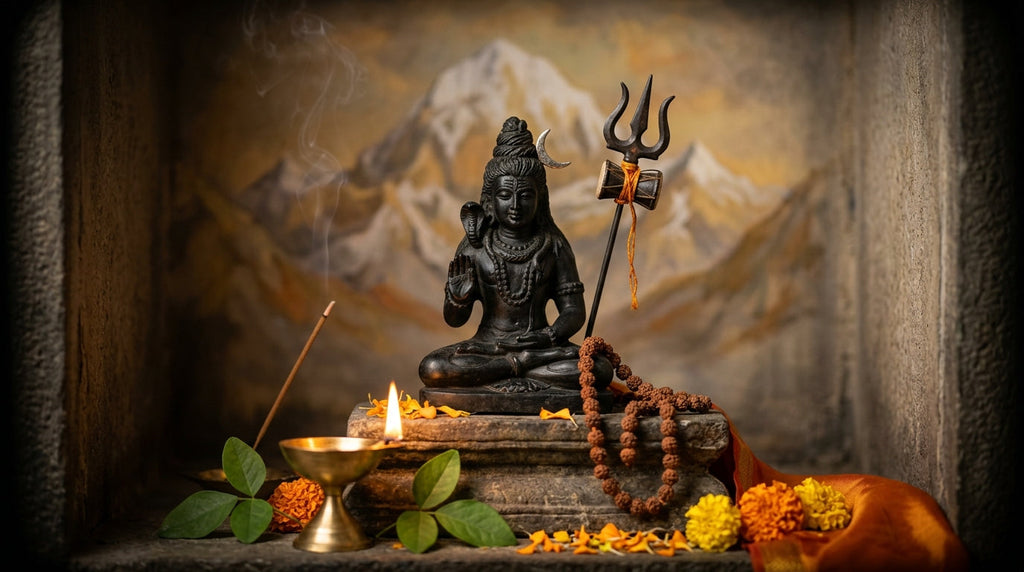
Come and sit close, for today's katha begins with a question that has travelled through phones and family groups: did a sage once defeat Lord Shiva himself? The name that always arrives with it is Charpatinath.
Here is the plain answer. Charpatinath is one of the Navnath, the nine great Nath masters, and a Marathi devotional text called the Navnath Bhaktisar tells that he overpowered Shiva and his attendants through a breath-control power. It is a story of the Nath devotional tradition, not a verdict of any Purana, and the Shaiva view stays firm that Shiva cannot truly be conquered.
So how do we hold both truths in one heart? Let us hear the tale slowly, the way elders tell it, and then understand what each side means by it. We write this at Dev Tattva for every family that wants a calm, honest answer rather than a loud one.
Who Was Charpatinath? The Nath Masters in Brief
The Naths are a lineage of yogis, wanderers and teachers who are remembered for discipline of body, breath and mind. Their tradition speaks of nine masters, the Navnath. Some of the names are known across India, such as Matsyendranath and Gorakhnath, and Charpatinath appears in most of the lists.
Here is the first caution. The lists of the nine are not identical everywhere, and the names are spelled in many ways. You may meet Charpatnath, Charpati or Charpatakshanatha, and all of them point to the same teacher in the Nath memory.
The Nath tradition traces its teaching back to Dattatreya, whom devotees hold to be the first guru, a form in which the powers of the three great gods are felt together. Shiva is honoured among the Naths as Adinath, the first Nath. Keep this in mind, because it changes how the story feels. In the Nath home, Shiva is not an enemy in the tale but the very root of the lineage.
The story we are about to hear comes from the Navnath Bhaktisar. This is a Marathi devotional work on the lives of the nine Naths, said to have been compiled by a poet named Narhari Malu. Several writers describe it as a long work of about forty chapters, and many sites place the Charpatinath and Shiva tale in the thirty-ninth. Editions and tellings differ, so we treat these numbers as popular reports and not as fixed facts.
The Katha: How Charpatinath Came to Stand Before Shiva
It is said that the tale begins in the heavens, in the court of Indra. Narada, the wandering sage who carries the news of all the worlds on his tongue and a veena on his shoulder, is not treated with the respect due to him. In the telling, it is this insult from Indra that sets everything moving.
Hurt, Narada does not argue. He goes instead to Charpatinath, a yogi whose mastery of breath is spoken of with awe, and he leads him up to the heavens. Picture that ascent: the earth shrinking below, clouds parting like curtains, and at last the great gates of Svarga glimmering ahead, with the sound of conches and the scent of celestial flowers in the air.

The guards at the gate are the first to meet him. The tradition says that Charpatinath overpowered them. Then the gods themselves came forward, and they too were overcome. Nothing in the telling is slow or soft here. Each rank of the heavenly court gives way to the next, and the yogi walks on, calm in a place where everyone else has lost their calm.
At last the story reaches Kailash. Shiva and his attendants stand in his way. The Navnath Bhaktisar, as it is retold, says that Charpatinath used a technique called Vatakarshana Vidya, a power of drawing the wind or breath, and that by it Shiva and his gana were overcome. The tale is clear that it was not a clash of weapons. The trishul and the damru stay silent in this telling, and the whole contest is won through the yogi's command of prana.
How the matter ends is where the tellings begin to part. In some tellings a sage named Pippalayan steps in to rescue Shiva. Others hurry on to praise the guru. I will not stitch together a neat ending that the tradition itself does not agree on. What every Nath telling shares is the feeling: that a true guru's power, once he is fully aware, can stand even before the gods.
The Gentler Telling: The Tiger and the Guru's Name
There is a second version, and many families prefer it. In this telling, Shiva himself decides to test Charpatinath. He appears before the yogi in the form of a tiger.
Imagine the forest going silent. A great striped shape steps from the shadows, and any ordinary traveller would run. Charpatinath, we are told, does not. He holds firm by chanting the name of his guru, and the tiger is stilled. Shiva, pleased with such steady faith, reveals himself and accepts the yogi's strength with joy.
Notice what has changed. There is no defeat here at all. Shiva is the teacher giving an exam, and the disciple passes it through devotion to his own guru. This is the telling a Shiva devotee can hear without any discomfort, and a Nath devotee can hear with full pride.
Which version is older, and how the two are related, I cannot say with certainty, and I will not pretend otherwise. Both are devotional retellings, passed along in songs, katha and print. The wise way is to hear both, and to remember that they were told by people who loved their guru and loved Shiva too.

Charpatinath vs Lord Shiva: Why Each Tradition Lets Its Own Hero Win
You may have noticed that a hero always wins in the book written by his devotees. This is true across the Hindu world, and it is nothing to be shocked about.
In the Shaiva tellings, Shiva is Mahadeva, the one beyond birth and measure, and no being can truly conquer him. In some Shaiva tellings, for example, Shiva takes the fierce form of Sharabha to calm Narasimha's rage, and the Shaiva point is that Shiva's power is the greater. In the Vaishnava tellings, Vishnu or Krishna holds that place. Krishna is said to meet Shiva on the field in the war around Banasura's city, and yet the tradition also tells how that war closes in reverence and peace.
There is also the old tale of Bhasmasura, who received a boon from Shiva and then turned on him, and of Vishnu appearing as Mohini to save the situation. Here Shiva is not weak. He is generous, a god who gives even to those who misuse the gift, and that very generosity makes the rescue necessary.
So the Nath tale is one voice in a larger chorus. Each community raises the god or guru it holds dearest. The Naths raise the guru, and the teacher's grace, above even the divine court. To read it as an insult to Shiva is to miss that the Naths begin their lineage at Shiva's feet.

There is another truth worth keeping in view. When a god "loses" in a Hindu story, it is usually by his own wish. He lets a devotee shine, he keeps his word to a boon, or he plays a lila, a divine game. The Shaiva view reads the tiger telling and the battle telling in the same way: Shiva allows what he allows, and nothing can bind him against his will.
What the Breath-Stopping Power Means
Why breath? Of all the powers in the world, why did the storytellers give the Nath yogi the mastery of prana?
The Naths are remembered for Hatha Yoga, the discipline in which the body, the breath and the mind are trained to work together. The old yogic idea is that the breath and the mind are tied like two birds on one string. When the breath becomes steady and still, the restless mind becomes still with it. A yogi who has mastered his breath has, in that sense, mastered himself.
Seen that way, the tale is not only about winning a fight. One thoughtful way to read it is this: in a place where all the gods are lost in pride and noise, the person with the stillest breath is the strongest. The story turns an inner victory into a scene you can picture, with the gate, the guards and the gods.
It also shows why the Nath path honours the guru so deeply. In the tiger telling, the yogi stands on the guru's name alone. The power belongs not to the disciple's cleverness but to the grace that flows down a long line of teachers, from Dattatreya and Adinath through the nine masters to the one sitting before us.
Here at Dev Tattva we believe a murti should travel with its story, so that the idol on your shelf is never only an ornament but a reminder of something you have heard and understood.
Names That Do Not Match: Pippalayan and the Nine Narayanas
Here is a small puzzle that scholars and devotees both notice. Many Nath devotees hold that the nine Naths are incarnations of the nine Narayanas, the yogis spoken of in the Bhagavata tradition. One source says that Pippalayan, one of those nine, was born again as Charpatinath.
Yet some tellings of this very story name a Pippalayan who comes to Shiva's rescue. If Charpatinath were Pippalayan reborn, the story would have him rescuing the god he had just overpowered, which is not how the tellings read. Either the names have been mixed in retelling, or the two figures are different, or different traditions are speaking.
I will not press these threads into one cloth. The honest position is that regional lists, spellings and tellings differ, and that this is exactly why a devotional text should be read as devotion and not as a legal record. If you want certainty about a particular name, ask a learned Nath guru of your own family's tradition and look at a proper printed edition.

How Devotees Honour Shiva and the Naths Today
What should a family do with such a story? The simplest answer is: keep both loves. A Shiva devotee can bow to the Naths as great yogis, and a Nath devotee can bow to Shiva as Adinath, and neither bow takes anything from the other.
Many Nath families read from the Navnath Bhaktisar, some in parts over several days, and customs differ from home to home. Dattatreya is remembered with devotion, and the guru is honoured with a humility that is the whole point of the tale.
For Shiva worship the simplest practice remains the best. Sit quietly before the murti, offer a little water, a few bilva leaves if you have them, light a lamp, and repeat the mantra:
ॐ नमः शिवाय
Om Namah Shivaya
I bow to Lord Shiva.
Then let the breath settle. Here is where the Nath teaching and the Shaiva teaching meet, for a few minutes of steady breathing before the deity is exactly what both traditions recommend. Nothing grand is needed, only attention.

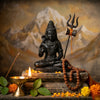
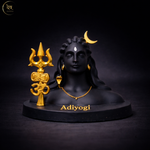
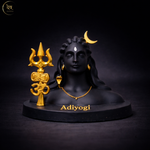
If you wish to keep a murti, choose one made with care. At Dev Tattva the handcrafted idols are made for the home mandir, the study table and the car dashboard. A family might place the seated Adiyogi Shiva idol with trishul on a shelf of the home shrine, where Shiva sits as the first yogi, a beautiful reminder of the Nath teaching that he is Adinath.
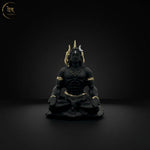
For a smaller space, the black and gold Shiv murti suits a desk or a quiet corner, and those who travel often may look at the car dashboard collection. Every murti at Dev Tattva is meant to sit quietly in an ordinary home and invite a moment of stillness.
Dev Tattva has no murti of Charpatinath or Dattatreya, so for those revered teachers a simple picture or the reading of their stories is the way, as your family's custom guides you.

One last thing. Please do not use this story as a weapon in an argument online. The Naths and the Shaivas are two streams of one river, and the tale was meant to deepen devotion, never to start a quarrel between those who love the same Mahadeva.

Frequently Asked Questions
Did Charpatinath defeat Lord Shiva, and is it true?
According to the Navnath Bhaktisar, a devotional text of the Nath tradition, he overpowered Shiva and his attendants with a breath-control technique. Shaiva tradition does not accept that Shiva can be defeated, and the Puranas do not tell this story. It is best read as Nath devotional literature, in which the guru's power is praised, and not as a ruling on who is greater.
Who is Charpatinath?
He is one of the Navnath, the nine Nath masters, a lineage that traces its teaching to Dattatreya and honours Shiva as Adinath. His name appears as Charpatnath and other spellings, and the lists of the nine vary by region. Little else about his life is settled, and I would not trust confident dates or birthplaces.
What is the Navnath Bhaktisar?
It is a Marathi devotional compilation about the nine Naths, said to be by Narhari Malu and described as a long work of about forty chapters. Many sources place the Charpatinath and Shiva tale in the thirty-ninth chapter. Since these details are repeated from site to site, it is wise to check them against a printed edition.
Is anyone more powerful than Shiva?
That depends on whom you ask, and each tradition answers from its own heart. Shaivas call Shiva supreme, Vaishnavas say the same of Vishnu, and the Shakta path says it of the Devi. Many elders also teach that these are different faces of one truth, which is why the stories end in reconciliation so often.
May Mahadeva and the long line of gurus bless your home with steady breath and a quiet mind. When you are ready to set a murti in your mandir, you are welcome to look at the Shiv collection at Dev Tattva, and may your devotion stay humble.

About the author
Pandit Om Prakash Saxena
Pandit Om Prakash Saxena is 94 years old and still active. For the last 72 years he has been involved in pooja, paath and all forms of karmakand, and he is associated with Shanti Kunj, Haridwar.
-
Posted in
Charpatinath, Hindu stories, Lord Shiva, Nath Sampradaya, Navnath