 All Deities
 Gift & Worship
 Best seller
 About Us
 Contact Us
 Blogs
BlogsWho Is Above Trimurti? The Katha Behind the Three
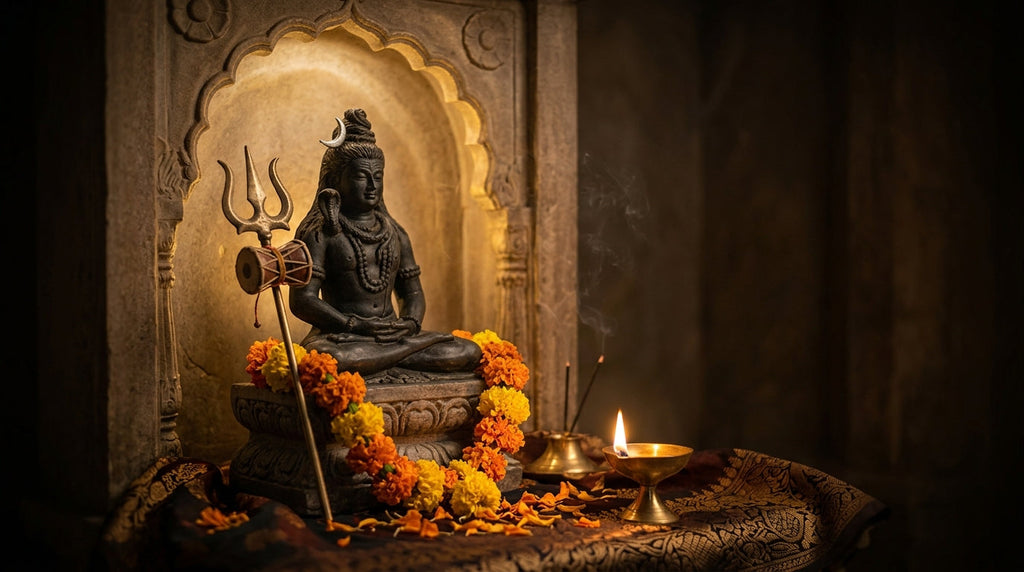
The elders tell us that when the world was only dark water, three great forms of the Divine took up three great tasks. Brahma makes, Vishnu keeps, and Shiva dissolves so that something new can begin.
Every child who hears this eventually asks the harder question. Who stands above the three? The short answer is Brahman, the one formless reality from which Brahma, Vishnu and Shiva themselves shine forth. Vaishnavas name Vishnu as supreme, Shaivas name Shiva, and Shaktas name the Goddess, Mahadevi. Each is a doorway, and the wise say all the doors open into one house.
Here at Dev Tattva we like to answer such questions the old way, through the katha. So settle down, and let us begin with a pillar of fire.
The Katha of the Pillar of Fire
Listen to how the story goes in the Shaiva tradition. Brahma and Vishnu once stood face to face, and each felt himself to be the greater. Brahma pointed to the whole creation as his work. Vishnu pointed to the world that rests safely in his keeping. The argument grew louder, and the heavens grew uneasy.
Then, without warning, a pillar of flame rose between them. It had no beginning that they could see and no end. It was vast, silent and bright. The two gods stopped speaking. Whoever could find an end of this pillar, they agreed, would be called the greater.
Vishnu took the form of a boar and dug down through the dark, deeper and deeper. Brahma took the form of a swan, the hamsa, and flew upward into the endless light. Time passed, and still the pillar went on.
At last Vishnu returned. He bowed his head and admitted that he had found no base. Brahma, tired from his long flight, had found no summit either. But in the tellings that follow, a ketaki flower came drifting down from above, and Brahma took it as his witness and declared that he had touched the top.
Then the pillar opened, and Shiva stood revealed in its light. He knew the truth. Vishnu's honesty was honoured, and Brahma's lie was rebuked. According to tradition, this is why Brahma has so few temples of his own. Pushkar in Rajasthan is the best-known place where Brahma is worshipped even today.
Tellings differ in small details, and the Puranas do not all speak in one voice. But the heart of the story is steady. Pride made two great gods small, and the pillar, the jyotirlinga, showed them something no one could measure. A Shaiva reads it as Shiva standing above the others. A Vedantin reads it as limitless Brahman, who has no top and no bottom, appearing as light.

The Katha of the Lotus and the Sleeping Lord
Now turn to the Vaishnava side of the family. At the end of an age, the tradition says, Vishnu rests on the coils of the serpent Shesha upon the cosmic ocean. From his navel rises a lotus, and on that lotus sits four-faced Brahma, newly born. He looks in every direction, sees only water, and wonders where he came from.
In these tellings Brahma is a creator who receives his task from Vishnu, the Preserver. The Bhagavata Purana, so dear to Vaishnavas, speaks in this spirit and holds Vishnu, or Krishna, as the highest. For them the Trimurti is real, but it stands within Vishnu's greater play.
The Devi Mahatmya tells the same scene from another side. Brahma sits on the lotus, Vishnu lies in deep yoga-nidra, the divine sleep, and two fearsome asuras, Madhu and Kaitabha, rush towards Brahma. Frightened, he turns to the Goddess who is that very sleep, and he praises her.
In his prayer, as the Devi Mahatmya has it, Brahma says that it is by her will that he, Vishnu and Shiva have taken bodies at all. Who then could ever praise her enough? The Goddess withdrew from Vishnu's eyes, he woke, and the long battle with the two asuras was won.
Notice how gently the two stories sit side by side. A Shakta hears that the Goddess is the power behind even Vishnu's sleeping and waking. A Vaishnava hears that yoga-nidra is Vishnu's own power. The elders say neither listener leaves the story empty-handed.

Why Hinduism Gives Many Answers to Who Is Above the Trimurti
Why does one question get so many answers? Because the answers grew in different soil, in different centuries.
The oldest Vedic hymns praise many devas, Agni, Indra, Varuna and others. Yet one verse of the Rigveda (1.164.46) says it plainly: एकं सद् विप्रा बहुधा वदन्ति, ekaṃ sad viprā bahudhā vadanti, "Truth is one; the wise speak of it in many ways." Here is the seed of everything that follows.
The Trimurti as a trio of creator, preserver and destroyer is a Puranic idea, and the Vishnu Purana opens by naming these three functions. But the Puranas were cherished by communities devoted to Vishnu, to Shiva or to the Devi. Each community, like a child praising its own mother, praised its beloved as the highest. Even the Mahabharata holds more than one voice. In its Anushasana Parva, Bhishma speaks of Shiva as the Supreme Brahman and the maker of Brahma, while Krishna is exalted elsewhere in the same epic.
Then came the Vedantic teachers, who gathered the many voices into one chorus. Whatever name you use, they said, you are pointing at Brahman. This is why the Brahman answer is the one most widely shared across Hindu families.
Who Is Above Brahma, Vishnu and Shiva: What Each Tradition Says
Let us hear each school in its own voice, without arguing for any. Traditions vary by region and family, and Dev Tattva keeps room for all of them.
The Vaishnava view
Vaishnavas hold Vishnu, often as Krishna or Rama, to be the Supreme. Brahma and Shiva are exalted beings who serve within his order. They look to the Bhagavata Purana and to the Bhagavad Gita, where Krishna says: अहं सर्वस्य प्रभवो मत्तः सर्वं प्रवर्तते, ahaṃ sarvasya prabhavo mattaḥ sarvaṃ pravartate (Gita 10.8), "I am the source of all; everything proceeds from me."
The Shaiva view
Shaivas worship Shiva as Parameshvara, the Supreme Lord. In this reading, creating, sustaining and withdrawing the world are three acts of one Shiva. The famous Trimurti-Sadashiva sculpture in the Elephanta Caves near Mumbai shows three faces on one great head, and Shaiva tradition reads it as one Lord showing three aspects.
The Shakta view
Shaktas place Adi Parashakti, Mahadevi, above all three. They turn to the Devi Mahatmya and the Devi Bhagavata Purana, and they cite the Tripura Upanishad for the Goddess's supremacy. In this reading she is the shakti, the power, without which none of the three could act. Short answers online often skip this view, yet countless devotees live by it every day.

The Smarta and Advaita view
Followers of Adi Shankara's Advaita Vedanta, and the Smarta families who follow that stream, hold that every deity is a form of one Brahman. Many such homes worship five deities together in panchayatana puja: Ganesha, Surya, Vishnu, Shiva and Devi. No one of them is ranked above the rest, because all are windows onto the same light.
Some devotees feel strongly that calling the three equal is itself a mistake. That is their sincere conviction, and the tradition has always had room for such conversation. The elders only ask that it be held with respect.
Brahman: The Formless One Behind the Forms
A small confusion first. Brahma, ending in a, is the creator god, one of the three. Brahman is the ultimate reality, beyond gender and form. People mix the two all the time, and clearing this up removes half the puzzle.
The Upanishads speak of Brahman in two ways. Nirguna Brahman is without attributes, beyond name and shape, which words can touch only by saying what it is not. Saguna Brahman is the same reality seen with qualities, as Ishvara, God with form, whom we can love, bow to and sing for. The Chandogya Upanishad (3.14.1) says: सर्वं खल्विदं ब्रह्म, sarvaṃ khalv idaṃ brahma, "All this is indeed Brahman."
Think of gold in a goldsmith's hands. He shapes a bangle, a necklace, a ring. The names and shapes differ, and the gold remains. Brahma, Vishnu and Shiva are like three splendid ornaments of one gold. The picture is simple and imperfect, as every picture of the infinite must be.
Many traditions also speak of the Tridevi, the three Goddesses: Saraswati with Brahma, Lakshmi with Vishnu and Parvati with Shiva. Knowledge, grace and strength are their gifts in the old telling. The Shakta tradition adds that they are not only consorts, but the very powers by which the gods act.

The Four Faces, the Lotus and the Three Heads: What They Teach
Brahma's four faces look in four directions, and tradition links them with the four Vedas. Nothing in creation, the image says, is left unseen by the maker. The lotus on which he sits grows out of mud yet stays untouched by it, and its rising from Vishnu's navel shows creation resting on the Preserver's calm.
The three-faced Trimurti form is a gentle lesson in itself. One body, three faces, one cycle of making, keeping and dissolving. Dissolution here is not cruelty. It is rest and renewal, the way night makes room for morning.
And the pillar of fire teaches what no sculpture can. Whoever claims to have measured the infinite has only measured his own pride. Vishnu's honest bow, even in failure, is remembered with love, while the false claim is remembered as a quiet warning.

How to Honour the Trimurti and the One Beyond at Home
You do not need to settle the great debate before you pray. Most families follow their ishta devata, the form of God they love best. The wise say that the form you worship is a path, and that the path leads to the same reality.
A simple daily puja is enough. Keep a clean shelf or mandir corner, light a diya, offer a flower and a little water, and speak a mantra softly. For Shiva it is ॐ नमः शिवाय, Om Namah Shivaya, "I bow to Shiva." For Ganesha it is ॐ गं गणपतये नमः, Om Gam Ganapataye Namaha, "I bow to Ganesha, remover of obstacles."
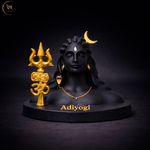
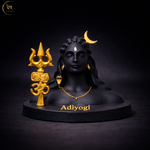
At devtattva.com you will find handcrafted murtis made for exactly such quiet corners. The present range gathers Shiva, Ganesha, Hanuman and Ram Lalla. The Shiv collection includes the Adiyogi Shiva idol with trishul for families who see in Shiva the Lord who stands beyond all form.

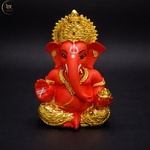
Those who begin every new work by bowing to Ganesha may look through the Ganesh collection. Travellers who like a small murti on the road may prefer the car dashboard collection. In the Vedantic view, a murti of one deity lacks nothing, since every form points to the same Brahman.
If your family wishes to keep several deities together, that is a lovely custom too. Place them on one clean, raised shelf, never on the floor, with the central place given to the form your family loves most. Many families face east or north while praying, but customs differ, so follow your own elders first.

Frequently Asked Questions
Who is the Supreme God in Hinduism?
There is no single answer that every tradition accepts. Vaishnavas name Vishnu or Krishna, Shaivas name Shiva, Shaktas name the Goddess, and Advaita and Smarta thinkers name formless Brahman, of whom all deities are forms. Dev Tattva places no deity above another in this telling. We simply report what each tradition holds.
Who created Brahma, Vishnu and Shiva?
It depends on whom you ask. Vaishnava tellings say Brahma is born from Vishnu's lotus. Shaiva tellings say Shiva is the maker of the other two. Shakta texts say all three took form by the Goddess's will. The Vedantic answer is that Brahman is the source of them all.
Is Shiva or Vishnu more powerful?
Each sampradaya honours its own beloved as supreme, and each tells beautiful stories to say so. The elders suggest a gentler view: Vishnu and Shiva are two faces of the one Divine, and arguing which is higher misses what both are pointing to. Choose the form that opens your heart and respect the other.
Why is Brahma not worshipped in temples?
According to the Shaiva tradition, Brahma was rebuked by Shiva for his false claim at the pillar of fire, and so he is rarely worshipped in temples. Pushkar in Rajasthan remains the best-known exception. Tellings and local customs differ, so it is best to hear this from your own family elders as well.
May the One who is beyond all names bless your home with peace, humility and a steady lamp. When your family is ready to set a murti in a quiet corner, you are welcome to visit Dev Tattva and choose the form your heart already knows.

About the author
Pandit Om Prakash Saxena
Pandit Om Prakash Saxena is 94 years old and still active. For the last 72 years he has been involved in pooja, paath and all forms of karmakand, and he is associated with Shanti Kunj, Haridwar.