 All Deities
 Gift & Worship
 Best seller
 About Us
 Contact Us
 Blogs
BlogsMost Powerful Weapon in Mahabharata: The Katha
It is said that when the great war at Kurukshetra ended, the sky itself seemed to remember the weapons that had been called down upon the field. Sit with me, and I will tell you which of them the elders speak of as the greatest.
The direct answer is this: the Mahabharata does not crown one weapon in a single line. The names raised most often are Shiva's Pashupatastra, Brahma's Brahmashira and Vishnu's Narayanastra, and Vaishnava devotees add the Sudarshana Chakra. Yet the katha teaches that the truly powerful weapon is the one held back by a wielder who knows dharma.
At Dev Tattva, where we offer handcrafted murtis of gods who hold these very symbols, we like to tell this story the way elders tell it: slowly, with the feeling left in.
Astra and Shastra: Two Kinds of Weapon in the Epic
The old books speak of two families of weapons. A shastra (शस्त्र) is what the hand holds and strikes with, such as a sword, a mace or a spear. An astra (अस्त्र) is what is sent out, called by a mantra and guided by the will of the one who knows it.
The weapons in this article are astras. Each is tied to a deity, and each had to be earned through tapasya, discipline and a teacher's trust. That is why the epic treats them less like machines and more like heavy responsibilities.
The Katha of Arjuna and the Pashupatastra
Listen to how the story goes. Before the war, the Pandavas were living in exile in the forest, and Arjuna, the finest archer among them, went north to the Himalayas. He wished for divine weapons, and he knew that the one who could grant the greatest of them was Mahadev, Lord Shiva.
He took up hard tapasya. He ate little, stood still for long hours, and fixed his whole mind on Shiva until the forest itself seemed to hold its breath.
Then, the elders tell us, a wild boar came charging into the place of his penance. Arjuna drew his bow and loosed an arrow, and in the same moment a hunter of the forest tribes, a Kirata, loosed his own. Both arrows had struck the boar. Whose kill was it?
The two quarrelled, and the quarrel became a fight. Arjuna, who had faced many fierce warriors, found that this hunter met everything he did with ease. Tired and humbled, he was left to wrestle a stranger on the mountain slope.
Arjuna then did what a devotee does. In popular tellings he shaped a linga of Shiva from the forest earth and laid flowers upon it. When he looked up, the very flowers he had offered were resting on the hunter's head, and he understood who stood before him. The Kirata was Shiva himself.
Pleased by Arjuna's courage and his humility, Mahadev granted him the Pashupatastra, named for Pashupati, the Lord of all living beings. This episode is told in the Vana Parva of the Mahabharata, and the Sanskrit poem Kiratarjuniya later retold it in a grand style.
Here is the part many people miss. Tradition remembers that this weapon was not meant to be flung at ordinary foes, and Arjuna did not loose it in the war. Tellings differ on whether the restraint was Shiva's condition or Arjuna's own good sense. Either way, the greatest gift was left unspent.

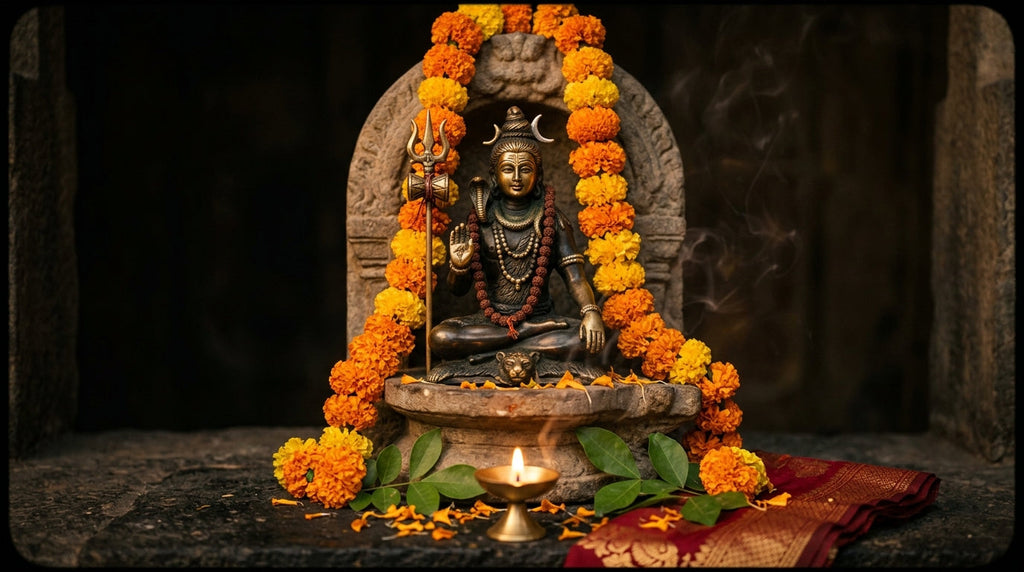
If you wish to see Mahadev as devotees picture him, with the trishul that shows his power resting in stillness, you will find such murtis in the Shiv collection at Dev Tattva.
When Two Brahmashira Weapons Met on the Bank of the Ganga
Now let me tell the saddest of the weapon stories, for it shows power at its most dangerous.
The war was almost over. In the dark of night, Ashwatthama, the son of Drona, burning with grief and rage, entered the Pandava camp and struck down those who lay sleeping, among them the young sons of Draupadi. When the Pandavas learned of it, they set out with Krishna to find him.
They found him near the Ganga, in the company of sages. Seeing them come, Ashwatthama picked up a blade of grass and called upon the Brahmashira, the terrible weapon of Brahma. He released it with the wish that the Pandavas should be ended.
Fire blazed in the sky. Krishna told Arjuna to answer with his own Brahmashira, and Arjuna released it with a prayer that the other weapon be met and stilled. The epic describes the earth trembling and meteors falling as these two forces drew near each other. Reportedly, a few other warriors also knew this astra, though the tellings vary on exactly who.
It was then that the sages Narada and Vyasa stepped between the two blazing weapons. They asked both warriors to call them back. Arjuna, trained in restraint, withdrew his astra at once.
Ashwatthama could not. He confessed that he had learned how to release the weapon but not how to recall it. Unable to take it back, he turned it toward the wombs of the Pandava women, and the unborn child of Uttara was in danger. Krishna protected that child, who grew up to be King Parikshit.
Ashwatthama gave up the jewel that shone on his forehead, and Krishna condemned him to wander in sorrow. Think about that for a moment. Two men held the very same weapon, and only one of them was fit to hold it.

The Narayanastra and the Weapon That Yields to Surrender
There is another astra of Ashwatthama's, and its story is gentler in the end. After his father Drona fell in the war, Ashwatthama called upon the Narayanastra, the weapon of Vishnu, and loosed it upon the Pandava army.
The sky filled with arrows of fire. The elders say that the more the soldiers fought it, the fiercer it grew. Panic ran through the ranks, and warriors raised their bows against something that bows could not answer.
Then Krishna called out to the army. Put down your weapons, he said, step down from your chariots, and stand with empty hands. Those who bowed were passed over by the flames, and in the end the astra went by.
This is what the weapon teaches. Some forces cannot be defeated by strength at all. They are answered by sharanagati (शरणागति), which means surrender with humility. The tallest warrior and the bravest bow were no use here, but an open hand was.

Sudarshana Chakra, Vajra and Other Great Weapons
No telling of this topic is complete without the discus of Krishna. The Sudarshana Chakra is the spinning disc of Vishnu, and Krishna used it to cut off the head of Shishupala, who had insulted him again and again in the royal assembly. Vaishnava tradition holds this weapon to be supreme, and that is a belief worth respecting.
Then there is Indra's Vajra, the thunderbolt, the weapon of the king of the gods. In the old tellings Indra raised it against the demon Vritra. Its name has become a word for something that cannot be broken.
The Mahabharata also remembers the Vasavi Shakti, the spear Indra gave to Karna. It could be used only once, and Karna had long meant to keep it for Arjuna. Even Arjuna's famous bow, the Gandiva, is counted among the great weapons of the epic.

So, Which Is the Most Powerful Weapon in the Mahabharata?
The lists you find online usually rank these weapons without saying by what measure. Let me offer three yardsticks the stories themselves seem to use.
- Reach: how much destruction the weapon can cause. By this measure the Brahmashira and the Pashupatastra are spoken of with awe.
- Control: whether the wielder can call it back. Arjuna could, and Ashwatthama could not.
- Restraint: whether the wielder knows when not to use it. Arjuna carried the Pashupatastra through the whole war and did not loose it.
Shaiva devotees often place Shiva's weapons, the Pashupatastra and the trishul, above all others. Vaishnava devotees place the Sudarshana Chakra and Vishnu's Narayanastra first. These are different traditions speaking out of different love, and the epic itself offers no scoreboard.
So here is the answer I would give a family sitting at my feet. If we must name one, many name the Pashupatastra for its reach and the Brahmashira for its terror. But the weapon that matters most is the one that stays in the quiver because a wise hand holds it.
What the Text Says and What People Add
Many videos and serials call these astras ancient nuclear weapons. The epic does describe frightening effects, such as the earth trembling and fire filling the sky, but it never explains the weapons in the language of modern science. Comparing them with bombs is a modern reading, not something the text claims.
Television retellings and games also add flames, sounds and battle scenes that you will not find in the verses. Enjoy them, but keep the original story in mind. The Mahabharata is, above everything, a katha about dharma, duty and consequence.
Details also differ between regions and between the epic and the later Puranas. When a story reaches you in more than one form, the elders would say: hold both, and look for the lesson they share.
Why Gods Hold Weapons: Trishul, Chakra and Gada in the Murti
When you look at a murti, the weapon in the god's hand is not a threat. It is power held in stillness. Shiva's trishul, with its three prongs, is explained by different traditions as the three gunas, or as creation, preservation and dissolution, or as past, present and future. Krishna's chakra speaks of the order of dharma, and Hanuman's gada speaks of strength placed wholly in service.
According to tradition, Hanuman has his own place in the Mahabharata too, for his image is said to have flown on the banner of Arjuna's chariot. If you wish to keep that strength near you, the Hanuman collection at Dev Tattva has handcrafted murtis for the home mandir or the study table.

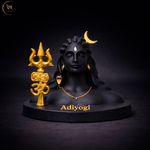
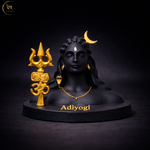
For devotees who love Mahadev, Dev Tattva offers an Adiyogi Shiva idol with trishul, and many families like to place a small murti on the dashboard through the car dashboard collection. Each piece is a quiet reminder in your daily path.
The way to honour such a murti is simple. Keep it in a clean place, offer a fresh flower when you can, and say a few words of prayer, such as ॐ नमः शिवाय (Om Namah Shivaya), which means "I bow to Lord Shiva." Then take the lesson of the katha with you: power is for protecting, and the wise hand holds back.


Frequently Asked Questions
Which is the most powerful weapon in Mahabharata?
The epic does not name one supreme weapon. The Pashupatastra, the Brahmashira, the Narayanastra and the Sudarshana Chakra are the names raised most often, and different traditions place different ones first. The stories show that restraint and control matter as much as raw power.
Pashupatastra vs Brahmastra: which is stronger?
Many Shaiva devotees regard the Pashupatastra of Shiva as beyond the weapons of Brahma, since Mahadev is called the Lord of all creatures. But the Mahabharata does not stage a contest between them, so it is best to say that traditions differ and leave it there.
Why didn't Arjuna use the Pashupatastra in the war?
Tradition remembers it as a weapon not meant for ordinary foes. Some tellings say Shiva gave it with that understanding, and others say Arjuna himself chose to keep it unused. In both versions, the restraint is the lesson.
Were Mahabharata weapons like nuclear bombs?
The epic describes the earth shaking and fire in the sky, and some people compare these to modern weapons. The text itself does not say so. It tells of astras called by mantra and bound to deities, and its focus is dharma, not technology.
May the stories of Arjuna, Krishna and Mahadev teach your family that true strength knows when to rest. If you wish to bring a handcrafted murti into your home, you are welcome to visit Dev Tattva and choose the one that speaks to your heart. Jai Shri Krishna, and Har Har Mahadev.

About the author
Pandit Om Prakash Saxena
Pandit Om Prakash Saxena is 94 years old and still active. For the last 72 years he has been involved in pooja, paath and all forms of karmakand, and he is associated with Shanti Kunj, Haridwar.
-
Posted in
Arjuna, Brahmastra, Hindu mythology, Mahabharata, Narayanastra, Pashupatastra