 All Deities
 Gift & Worship
 Best seller
 About Us
 Contact Us
 Blogs
Stylish New Style Ganesh Murti: A Pandit-ji's Guide
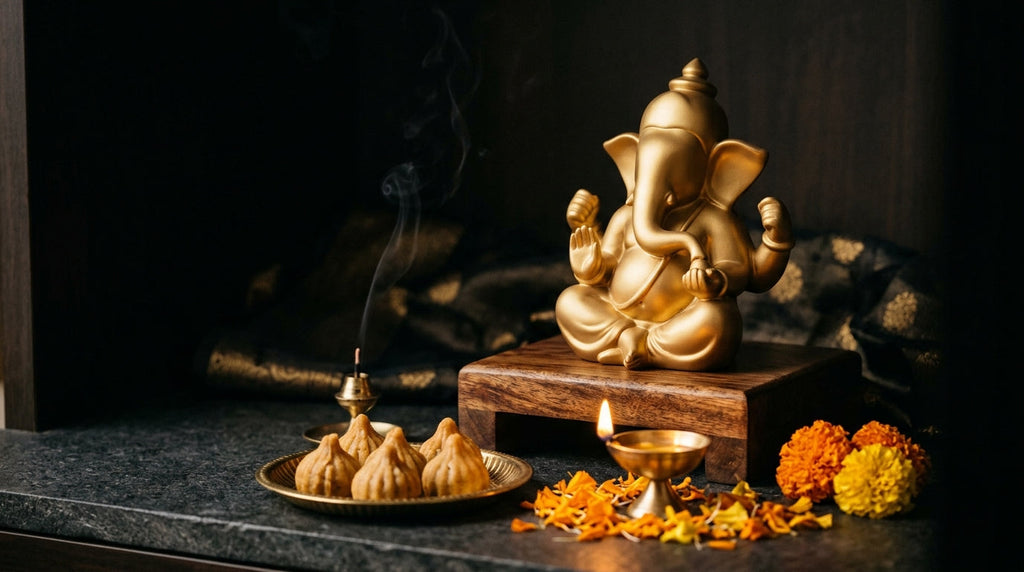
The elders tell us that every good beginning in a Hindu home starts with a small bow to Ganapati. These days that bow is often made before a murti that looks different from the one our grandparents kept: smoother, cleaner in line, finished in matte gold or a bright glossy colour.
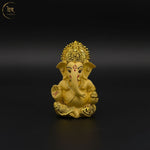
So what is a stylish new style Ganesh murti? It is a contemporary form of the deity, simpler in shape and finish, that still keeps the elephant head, the trunk, the broad ears and the gentle seated posture. Tradition places bhakti, the feeling in the heart, above fashion, so a modern murti made with respect is a fine place to offer your prayer.
At Dev Tattva, families ask this question again and again, especially before a housewarming or a gift. Let us answer it the way a pandit-ji would, with the katha first, because the story tells us what must never be lost, whatever the style.
The Katha: A Boy Guarding the Door
Listen to how the story goes. On Mount Kailash, Goddess Parvati was about to bathe, and she wished for someone to keep watch at her door so that no one would enter unannounced. According to tradition, she shaped a boy from the paste she used for her bath, and gave him life. In popular tellings he is her very own son, made with a mother's love.
She gave him one simple charge: let no one pass. The boy took his place at the threshold, small, steady and completely devoted. Imagine the quiet of the mountain, the cold clear air, the sound of water from within, and a child standing straight because his mother had trusted him.
Then Lord Shiva returned, and the boy, who had never seen him, stopped him at the door. He did exactly as he had been told. Shiva was surprised that anyone would bar his way, and a conflict followed in which the boy lost his head.
When Parvati came out and saw what had happened, her grief shook the heavens. Tellings differ on the finer details of this scene, but they agree on this: a mother's sorrow was so great that the gods themselves were moved to set things right.

The Elephant Head and the First Worship
Shiva then sent his attendants, the ganas, to find a head to replace the one that was lost. In popular tellings it was the head of an elephant, and when it was placed upon the boy, he opened his eyes once more.
Shiva embraced him as his own son, named him Ganapati, Lord of the ganas, and gave him a place of honour. By tradition, he is remembered before any other deity at the start of a puja, a journey, a wedding or a new home. That is why we say his name first, every time.
There is one more well-loved story. In popular tellings, when the sage Vyasa wished to recite the Mahabharata, Ganesha agreed to write it down, and when his pen broke, he used his own tusk to keep writing without pause. This is why he is often shown with one tusk whole and one broken. Regions tell this tale in different ways, and that is fine. Traditions have many rivers, and they flow to the same sea.
Now think of this. A child who obeyed his mother, a god who gave up a tusk for a book. Ganesha is the Lord of sincere effort. Whether the murti before us is carved in an old classical style or shaped in a clean modern line, it is this Ganesha we are bowing to.
What Keeps a Modern Ganesh Murti Recognisably Ganesha
Many people ask us the same worry. Is a modern shape proper? The answer lies in the signs that tradition has always used to know him. If those signs are present, the murti is recognisable, and devotion can flow.
- The elephant head: the heart of the katha, and the first thing the eye looks for.
- Large ears: commonly explained as a reminder to listen more than we speak.
- The trunk: a symbol of strength joined with gentleness, able to lift a mountain or pick up a needle.
- The big belly: a picture of a heart wide enough to hold the joys and troubles of life.
- The modak: the sweet he loves, often explained as the sweetness of a life lived with devotion.
- Mushika, the mouse: his humble vahana, a sign that even the smallest creature has a place beside him.
A sleek murti with simplified fingers and a smooth finish still shows these signs. It may speak in a modern language, but it speaks of the same Lord.
Here is a verse that countless families recite before him. वक्रतुण्ड महाकाय सूर्यकोटि समप्रभ । निर्विघ्नं कुरु मे देव सर्वकार्येषु सर्वदा ॥ It is read as Vakratunda Mahakaya Suryakoti Samaprabha, Nirvighnam Kuru Me Deva Sarvakaryeshu Sarvada, and it means: O Lord with the curved trunk and mighty body, whose radiance equals a million suns, make my work free of obstacles, always.
Traditional and Modern: What Really Changes
Think of how a single katha is told in many voices. A grandmother tells it slowly by the lamp, a schoolteacher tells it briskly, a child tells it with her hands. The story is the same. The telling changes with the teller and the time.
A murti is much like that. The older style may show a richly detailed crown, many ornaments and deep carving. The newer style may soften the lines, choose a single colour, or give the crown the shape of a simple turban. What changes is the language of the form. What stays is the face that tells you, at a glance, who is sitting before you.
Still, some families like to keep a classical murti in the main mandir and place a modern one on a desk, a shelf or a dashboard. There is no fault in either choice. Do what brings peace to your own heart and house.

Choosing a Stylish New Style Ganesh Murti: Material, Finish and Size
Once the heart is settled, the choosing becomes simple. Take your time and think about where the murti will stand, who will see it, and who will care for it each day.
Material. Brass and metal feel weighty and have a long tradition. Marble and stone are cool to the touch and graceful. Polyresin and fibre are light, hold fine detail, and take colour well, which is why many modern murtis are made in them. Clay murtis made for Ganesh Chaturthi are meant for immersion, so they belong to that festival rather than daily display.
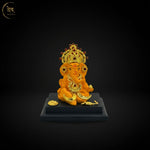
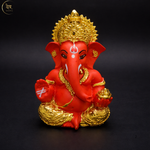
Finish. Matte gold gives a quiet, dignified look. Glossy colour looks bright and cheerful on a study table. A soft-feel surface is pleasant to hold. A gold-plated finish catches the glow of the diya. Choose what feels peaceful to your eyes, because you will see this face every morning. A good example of a compact modern form is the Ganesha Soft Feel Pagdi idol, a small murti with a turban-style crown.
Size and base. A home mandir shelf, an office desk and a car dashboard are very different places. Pick a size that fits the space without crowding other deities, and look for a firm, flat base so the murti stands steadily. A murti should never wobble.
Hand finishing. A handcrafted murti carries the care of the hand that painted its eyes and smoothed its trunk. Look closely at the face. A calm, balanced expression matters more than any decoration.

Stylish Ganesh Murti for Car Dashboard, Desk and Gifting
Many families like to begin every journey with a prayer, and a small Ganesh murti on the dashboard is a loved custom. For this, choose a compact one, around three to four inches, with a flat base. Use a non-slip pad beneath it so it does not slide on turns, and keep it where it does not block your view. The car dashboard collection at Dev Tattva is one place to look for such murtis.

On an office desk or a study table, a small murti is a gentle reminder to begin work with a clear mind. Students often place Ganesha near their books, as he is honoured as a patron of learning and, in popular tradition, the scribe of the Mahabharata. The office desk collection has murtis sized for just such spaces. Keep the surface clean and the murti a little raised, never under papers or stacked with clutter.
As a gift, a Ganesh murti is a lovely choice for a housewarming, a wedding, a birthday or a return gift, since he is invoked at every new beginning. Wrap it softly, and write a simple note, such as: May every new step of yours begin with Ganesha's name. The gifting collection can help you find something suitable. Dev Tattva murtis are made to be given with a clean heart and a kind word.

How Devotees Honour a New Ganesh Murti at Home
The best way to welcome a murti is the simplest. Clean the place where he will stand and spread a fresh cloth. Many families place the murti facing a clean open space, and some prefer the east, though customs about direction, and about which way the trunk curves, differ from family to family and region to region. Follow your own family's way, or ask an elder.
Light a diya and a stick of incense. Offer a fresh flower, a little jaggery or a modak, and fold your hands. Then say the mantra with a calm mind.
ॐ गं गणपतये नमः
Om Gam Ganapataye Namaha
I bow to Lord Ganesha, the remover of obstacles.
After that, daily care is easy. Dust the murti gently with a soft dry cloth. Offer a flower or a moment of silence each morning. Keep the shelf tidy, and keep it away from places that are unclean or crowded with shoes and clutter.
If a murti is broken or you wish to retire it one day, do not simply throw it away. Many families immerse it respectfully in flowing water, or place it at the foot of a peepal tree, or follow their local custom. When in doubt, ask your family priest.
Whether in a grand mandir or on a small shelf beside your bed, the murti is not decoration. It is a doorway for the mind. This is what Dev Tattva hopes each murti will be in your home.

Frequently Asked Questions
Is it okay to keep a modern or abstract Ganesh murti at home?
Yes, if it still shows the recognisable signs of Ganesha, such as the elephant head, trunk and ears, and you keep it with respect. Tradition values devotion above style, though some families prefer classical forms for their main mandir.
Which Ganesh murti is best for a car dashboard?
A small, steady murti with a flat base, placed on a non-slip pad, suits a dashboard well. Make sure it does not block your view or slide when you turn.
Which material is best for a Ganesh murti?
There is no single best material. Brass and marble are traditional and weighty, while polyresin and fibre are light and take colour well. Clay is for festival immersion. Choose according to where the murti will stand and how you will care for it.
Which direction should a Ganesh murti face, and where should it go?
Opinions vary across families, regions and Vastu schools, so there is no one rule. Many keep Ganesha in a clean, raised, quiet place such as the mandir, a desk or near the entrance, but the most important thing is cleanliness and respect.

May Ganapati Bappa bless every new beginning in your home with calm and clarity. If you are looking for a murti to begin with, you are welcome to explore the Ganesh collection at Dev Tattva. Ganpati Bappa Morya.

About the author
Pandit Om Prakash Saxena
Pandit Om Prakash Saxena is 94 years old and still active. For the last 72 years he has been involved in pooja, paath and all forms of karmakand, and he is associated with Shanti Kunj, Haridwar.
-
Posted in
car dashboard idol, Ganesh murti, Ganesha katha, gifting, home mandir, modern Ganesha idol