 All Deities
 Gift & Worship
 Best seller
 About Us
 Contact Us
 Blogs
BlogsWhich Divine Weapon Rules All Others in Hindu Mythology?
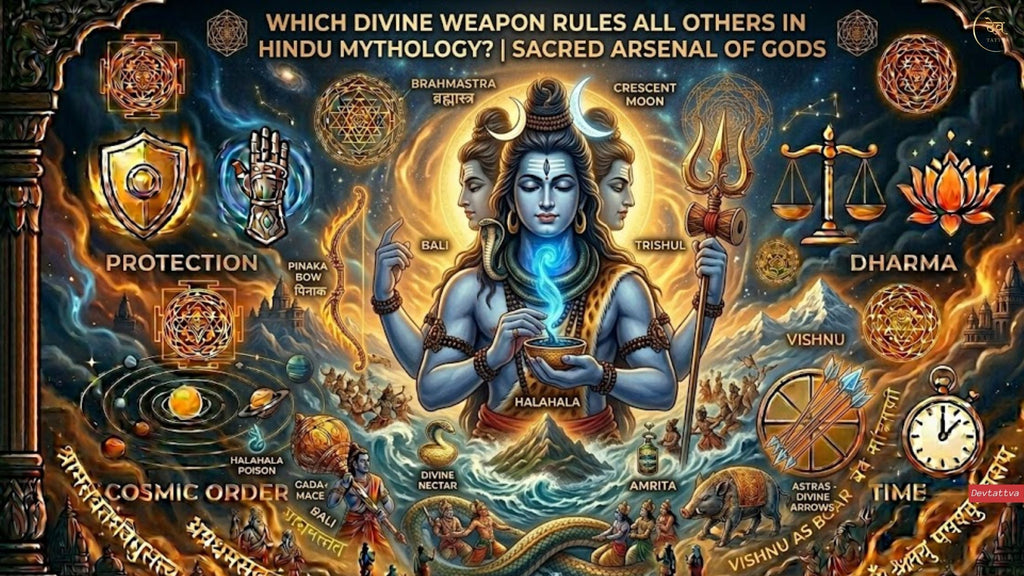
The Arsenal of the Gods
In the silence before dawn, when the first temple bells ring across the Ganga's banks, devotees whisper prayers to deities who once wielded weapons that could unmake creation itself. But among all the divine armaments that thunder through our sacred texts — which one stands supreme?
The question has echoed through ashrams and palace courts for millennia. Sages have debated it. Kings have wondered about it. Children listening to their grandmothers' stories have asked it with wide eyes: What is the most powerful weapon in all of Hindu mythology?
The answer, like all profound truths in our tradition, is not simple. It is layered, like the petals of a lotus opening at different times to different seekers.
The Brahmastra — The Ultimate Destroyer

When the Mahabharata speaks of the Brahmastra, even the text seems to tremble. This is not merely a weapon — it is the concentrated power of Brahma himself, the creator, turned toward destruction.
Yasya prasādād bhagavān brahmaṇo 'pi mahātmanaḥ — By whose grace even the great soul Brahma gains his power, the Vishnu Purana reminds us. The Brahmastra carries this same divine essence, but weaponized.
Arjuna possessed it. Drona taught it to his most trusted students. But its use came with a terrible price — it could destroy not just armies, but entire bloodlines, leaving the earth barren for generations. When Ashwatthama unleashed it in rage after the great war, even Krishna had to intervene to prevent the end of the Pandava lineage.
The old storytellers in Kurukshetra still speak of patches of land where nothing grows — places where, they whisper, the Brahmastra's fire once touched the earth.
Sudarshan Chakra — The Wheel of Time Itself
But if the Brahmastra represents ultimate destruction, Vishnu's Sudarshan Chakra embodies something even more profound — the power of cosmic order itself.
Watch a potter's wheel spin, and you glimpse the Sudarshan's essence. It is not chaos. It is perfect, inevitable rotation — the wheel of dharma made manifest. When Krishna raises his finger and the Chakra appears, spinning with the light of a thousand suns, it does not merely cut through enemies. It cuts through the very fabric of adharma.
The Bhagavata Purana tells us: Sudarśanaṁ cakraṁ ca me kāla-rūpaṁ — My Sudarshan Chakra is time itself in form. This is why it never misses. This is why it cannot be stopped. You cannot fight time. You can only surrender to it or be destroyed by it.
Divine Protectors for Your Sacred Space
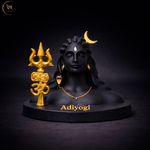
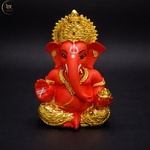
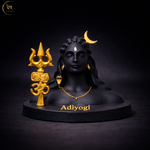
Just as these cosmic weapons protected dharma, let these blessed murtis guard your home with their presence


Shiva's Trishul — The Three-Pronged Truth
Yet there are those who would argue that Shiva's Trishul surpasses even these. Not because of its destructive power — though that is absolute — but because of what it represents.
Three prongs. Three gunas — sattva, rajas, tamas. Three times — past, present, future. Three states of consciousness — waking, dreaming, deep sleep. The Trishul does not merely destroy enemies. It destroys the very illusion of separation between the three aspects of existence.
When Shiva dances his Tandava, the Trishul in his hand is not a weapon of war. It is the instrument of cosmic dissolution — the force that clears away the old creation so the new one can begin. In the Shiva Purana, we read: Triśūlaṁ tribhuvanādhāraṁ — The Trishul is the support of the three worlds.
The weapon that supports is more powerful than the weapon that merely destroys.
The Bow That Chose Its Wielder
But perhaps we are thinking about this question in the wrong way. Perhaps the most powerful weapon is not the one that causes the most destruction, but the one that reveals the most truth.
Consider Shiva's bow — the Pinaka. When Vishvamitra wanted to test Rama's worthiness, he did not ask the prince to lift a mountain or defeat an army. He asked him to string a bow. Not just any bow — Shiva's bow.
The bow had been lying in Janaka's palace for generations. Thousands of princes had tried to string it. Kings had brought their strongest warriors. None could even move it from its resting place.
But when Rama — barely more than a boy — approaches the bow, something extraordinary happens. He does not struggle with it. He does not strain against its divine weight. He simply touches it, and it responds. More than responds — it breaks from the sheer force of his dharmic presence.
The most powerful weapon, the bow seemed to say, is not the one that destroys the most enemies. It is the one that recognizes its true master.
Hanuman's Greatest Weapon

This brings us to a weapon that appears in no arsenal, that no smith ever forged, that no mantra can summon — yet it proved more powerful than any Brahmastra.
Hanuman's devotion.
When Ravana's court magicians try to burn Hanuman's tail, the fire spreads everywhere except where it should. When Ravana's greatest warriors attack him, their weapons pass through him like he is made of air. When the most powerful rakshasas in Lanka try to bind him, the ropes fall away.
Why? Because Hanuman carries no weapon except his love for Rama. And that love makes him invincible in a way that no divine armament ever could.
The Hanuman Chalisa tells us: Rāma rasāyana tumhare pāsā — You possess the elixir of Rama's essence. This is not metaphor. This is the literal truth. Devotion, when it becomes absolute, becomes a force that even the gods must respect.
The Weapon That Ends All Weapons
So which weapon is truly the most powerful? The answer depends on what we mean by power.
If we mean the ability to destroy, then the Brahmastra reigns supreme. If we mean the ability to maintain cosmic order, then the Sudarshan Chakra has no equal. If we mean the ability to transform consciousness itself, then Shiva's Trishul stands alone.
But if we mean the power to end the very need for weapons — then we must look beyond the divine arsenal entirely.
In the Bhagavad Gita, Krishna reveals the ultimate weapon: Sarva-dharmān parityajya mām ekaṁ śaraṇaṁ vraja — Abandon all varieties of dharma and surrender unto me alone. This is not a weapon that destroys enemies. This is a weapon that transforms enemies into devotees.
The most powerful weapon in Hindu mythology is not a thing at all. It is a relationship. It is the bond between the devotee and the divine that makes all other weapons unnecessary.
The Living Tradition
Today, in temples across India, priests still perform the Sudarshan Homam, invoking the protective power of Vishnu's chakra. In Shaivite temples, devotees still offer bilva leaves to the Trishul, seeking the destruction of their inner enemies — anger, greed, delusion.
And in every Hanuman temple, from the grandest in Connaught Place to the smallest roadside shrine, devotees still whisper the Chalisa, knowing that the greatest weapon of all is not something you wield, but something you become.
The question of which weapon is most powerful is really a question about what kind of power we seek. The power to destroy? The power to protect? The power to transform?
The ancient rishis, in their infinite wisdom, gave us all three. They knew that different moments call for different kinds of strength. Sometimes we need the Brahmastra's finality. Sometimes we need the Sudarshan's precision. Sometimes we need the Trishul's transformative fire.
But always — always — we need the devotion that makes us worthy to wield any weapon at all. For in the end, the most powerful weapon in Hindu mythology is not the one that wins battles. It is the one that ends the war between the soul and the divine.
And that weapon, dear reader, is already in your hands. It always has been.