 All Deities
 Gift & Worship
 Best seller
 About Us
 Contact Us
 Blogs
BlogsWho Is the Father of Lord Shiva? The Eternal Mystery
The Question That Dissolves Itself
A young devotee once approached his guru with trembling hands folded in prayer. "Guruji," he whispered, "who is the father of Mahadev? Who gave birth to the one who destroys death itself?"
The old sage smiled, his eyes twinkling like stars reflected in still water. "Beta," he said gently, "you are asking who lit the first lamp in a world where light itself was not yet born."
Before Time Learned to Count
In the beginning, there was no beginning. Before the first breath of Brahma, before the first dream of Vishnu, before the first sound echoed in the cosmic void, there was only Shiva — not as a deity with form, but as pure consciousness itself.
The Shiva Purana speaks of this eternal truth: Na tasya janma na mrityuh, na pitaa na maataa cha — He has no birth, no death, no father, no mother. Shiva exists beyond the cycle of creation and destruction because he is that cycle.
Picture the moment before the first sunrise. There is no east, no west, no direction at all. In that timeless space, Shiva dwells — not waiting to be born, but simply being.
The Cosmic Dance of Self-Creation
When the rishis meditated on this mystery, they received a vision that shattered their understanding of parenthood itself. They saw Shiva emerging from his own cosmic dance, creating himself through the rhythm of his eternal movement.
In the sacred groves of Chidambaram, where Shiva performs his Ananda Tandava, the priests still whisper an ancient truth: "Shiva is his own father, his own son, his own beginning and end." The dance creates the dancer, and the dancer creates the dance.
A village grandmother in Tamil Nadu once explained this to her grandson as they watched a potter at his wheel: "See how the pot emerges from the clay, beta? But Shiva is both the potter and the clay, the wheel and the hands that shape. He needs no one else to bring him into being."
The Linga — Symbol of the Sourceless Source
The Shiva Linga stands in temples across Bharat as the ultimate answer to this question. It has no beginning and no end — a perfect cylinder that emerges from the earth and disappears into infinity. This is not mere symbolism; it is sacred geometry encoding the deepest truth about Shiva's nature.
The Skanda Purana tells us: Anaadimadhyanidhanaṃ Shivam — Shiva is without beginning, middle, or end. The Linga represents this eternal principle — the cosmic pillar of light that Brahma and Vishnu once searched for, only to discover it had no top and no bottom.
Bring the Eternal Presence Home
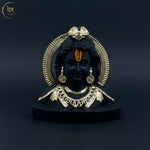
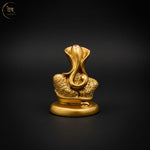
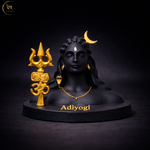
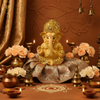
These sacred forms carry the same timeless energy this ancient truth reveals

The Paradox of Divine Parenthood
Yet the scriptures, in their infinite wisdom, also speak of Shiva's relationships within the cosmic family. The Puranas tell us that Brahma emerges from Vishnu's navel, Vishnu rests in Shiva's meditation, and Shiva dances in Brahma's dream. They are not father and son — they are three faces of one eternal truth.
In Kashmir Shaivism, the great sage Abhinavagupta explained this mystery: "Shiva is the father of all fathers, yet he himself is fatherless. He is the source that needs no source, the light that casts no shadow because it is all shadows and all light."
The Mahabharata offers another perspective: Shivo vai Brahma, Brahma cha Vishnu — Shiva indeed is Brahma, and Brahma is Vishnu. In this understanding, asking for Shiva's father is like asking which wave gave birth to the ocean.
The Living Truth in Sacred Geography
Travel to Kedarnath, where Shiva's temple emerges from the Himalayan peaks like a natural formation of stone and snow. The priests there will tell you that Shiva was not installed in this place — he was discovered here, as if the mountain itself had always been his form.
In Varanasi, the eternal city that Shiva holds in his trident, the evening aarti echoes with the truth: Har Har Mahadev — every soul is Shiva, and Shiva is every soul. The father-son relationship dissolves into the recognition that all consciousness is one consciousness, appearing as many.
At Amarnath, where the ice Shiva Linga forms naturally each year, pilgrims witness the annual miracle of Shiva creating himself from the elements — no human hand shapes that sacred form. It emerges from the cave's breath, the mountain's prayer, the devotion of countless hearts.
The Adi Yogi's Eternal Teaching
When Shiva first appeared as the Adi Yogi — the first teacher of yoga — he sat in meditation for eons before opening his eyes to find seven rishis waiting for his wisdom. They asked him the same question that echoes through time: "Who are you? Where do you come from?"
Shiva's answer was not words but silence. In that silence, the rishis understood: consciousness needs no birth certificate. Awareness requires no ancestry. The witness of all existence cannot itself be witnessed being born.
The Vigyan Bhairav Tantra, Shiva's gift to Parvati, begins with this understanding: Devi, you who are the source of all questions, know that I am the space in which all answers arise and dissolve.
Why This Question Matters Today
In our age of genealogy websites and family trees, we seek origins for everything. But Shiva's fatherless existence points to a deeper truth about our own nature. We are not merely the products of our parents, our past, our circumstances. At our core, we are the same eternal consciousness that Shiva represents — birthless, deathless, complete.
Every time you sit in meditation, you touch this Shiva-nature within yourself. Every moment of pure awareness, free from the story of "I was born, I will die," is a glimpse of your own fatherless, motherless, eternal essence.
The question "Who is Shiva's father?" ultimately becomes "Who am I beyond my story of birth and death?" And in that recognition, the seeker and Shiva become one — both emerging from the same sourceless source, both dancing the same eternal dance of consciousness knowing itself.
In temples across Bharat, the evening aarti still rises like incense toward the infinite. Devotees still place their hands on the Shiva Linga and feel the pulse of eternity beneath their palms. The question of Shiva's father dissolves into the deeper mystery: not who created Shiva, but how Shiva continues to create himself as the universe, as you, as this very moment of wondering.