 All Deities
 Gift & Worship
 Best seller
 About Us
 Contact Us
 Blogs
Durga Puja Decoration at Home: A Pandit-ji's Guide

Come, sit close, and listen. Every autumn, when the morning air turns soft and white kans grass sways along the riverbanks, the elders say that the Mother is getting ready to come home.
So how do we decorate for her? Durga Puja decoration at home begins with a clean, raised place for the goddess, framed by fresh flowers, a kalash with mango leaves and a coconut, steady diyas, and a white alpona or rangoli at the threshold, in red, white and gold. Everything else is a loving extra.
But before we hang a single garland, let us hear why the Mother comes at all. Once you know the katha, decoration becomes welcome. At Dev Tattva, we like to say that a home mandir is not furnished, it is prepared, the way you prepare for a beloved guest.
The Katha: A Goddess Born From the Light of the Gods
It is said that long ago there lived an asura named Mahishasura, who could take the form of a buffalo. Having won a powerful boon, he grew proud and drove the devas out of heaven. The gods lost their homes and their peace.
In their trouble they turned to Brahma, Vishnu and Shiva. According to tradition, anger rose in the three when they heard of the demon's cruelty, and a blazing light gathered from their faces and from the radiance of all the other gods. That light took shape as a woman of fierce and gentle beauty, Devi Durga.
Then each god gave her something of himself. In popular tellings, Shiva gave a trident and Vishnu a discus, others gave their own weapons and ornaments, and the Himalaya offered a lion to ride. Armed by all of them, she carried the strength of all of them together.
She faced Mahishasura, who changed shape again and again, and she followed him through every form. In the end his pride was finished and the heavens were free. Picture the roar of the lion, the ringing of weapons, the gods watching from above, and then a great quiet, like the air after a storm.
That victory is what the festival remembers. Families count the days in different ways, as nine nights, as five main days, or with a tenth day of victory, so follow the way of your own household.

A Daughter Comes Home in Autumn
Bengal loves another thread of the story. In many Bengali homes, Durga is seen as a daughter who visits her parents' house for a few days each autumn, with her children Lakshmi, Saraswati, Ganesha and Kartikeya. Her coming is felt more as a family reunion than as a grand show.
In some Bengali tellings, Rama too is said to have called upon the goddess in autumn before his battle with Ravana, an unusual season for such worship. Tellings differ, and not every version of the epic includes it, so hold it lightly. Still, it helps explain why the welcome carries such eager warmth.
So when you decorate, do not think of a stage. Think of a daughter arriving after a long journey, and a mother who wants everything clean, bright and ready.

What Each Element of Durga Puja Decoration at Home Means
Most decoration advice tells you what to put up. The elders always began with why. Here is what the old customs say about the things we place around the Devi.
- Alpona or rangoli: In Bengal, alpona is painted with a paste of ground rice, often in lotus patterns and small footprints that invite the goddess of prosperity into the house. Rangoli at a doorway elsewhere carries the same wish: come in, you are expected.
- Kalash: A pot of water topped with mango leaves and a coconut stands for fullness and for the Devi's presence. Many families treat it as the heart of the puja corner.
- Mango leaves: Strung over the door as a toran, they are an old sign of auspicious beginnings.
- Kans grass: Its white plumes announce autumn in Bengal. A few stems in a vase quietly say that the Mother's days have come.
- Marigold and hibiscus: Marigold is the flower of every Indian threshold, and red hibiscus is dear to the Devi in many traditions.
- Lamps: A diya is a small, honest offering of light. It says that we are awake and ready to receive her.
As for colour, red, white and gold are the usual choice. Red is the colour of shakti, white is the purity of rice paste and kans grass, and gold is the shine of the Devi's ornaments. The red-bordered white sari of a Bengali household brings all three together.
Setting Up the Puja Corner: Where to Place Durga at Home
Begin with the place. Choose a clean, quiet spot where the family can stand or sit before the Devi without being pushed aside by daily traffic. Many families prefer the east or north-east of the home, but traditions vary by region and family, and a peaceful, tidy corner matters most.
Raise the seat. A low wooden chowki or a small platform covered with a clean red or white cloth is customary. The murti or picture of Durga should not rest directly on the floor, nor stand where feet will pass in front of her.
Then dress the spot in layers, as you would lay out a thali. Place the Devi at the centre, the kalash to one side, and flowers around the base. Keep the diyas a safe distance from the cloth. A backdrop of red or cream fabric will make the corner feel like a small pandal.
If your family already keeps Ganesha or Shiva in the mandir, they may stay near the Devi, since in the family tradition they are her son and her husband. At Dev Tattva, you will find handcrafted Ganesha murtis and Shiva murtis made for a home shelf like this.

A word on which Durga to bring. Some homes bring a clay idol for the festival days, while others keep a permanent brass or stone murti, or a framed picture, through the year. All are accepted. What matters is that she is placed with respect and cared for.

Welcome at the Entrance: Alpona, Torans and Lights
The doorway is where the festival really begins, because that is where the Mother will first look. Sweep it, wash it, and let it dry before you draw anything.
To make a simple alpona, soak raw rice for a few hours, grind it with water into a thin white paste, and draw with your fingertips or a small cloth dipped in it. Start with a lotus of eight or more petals, add a ring of dots and curves, and finish with two small footprints pointing inward. If rice paste is difficult, a rangoli of flour or flower petals is just as welcome.
Over the door, hang a toran of fresh mango leaves and marigolds. Mango leaves dry quickly, so tie fresh strings on the first day and again midway through the festival.

For light, set diyas of clay or brass along the doorstep, and add a few strings of soft yellow lights near the puja corner. Keep every flame well away from curtains, drapes and dry garlands. Place diyas on a steel plate or a bed of sand, never loose on cloth, and never leave a lit lamp alone in a room.
Simple and Low-Budget Durga Puja Decoration Ideas
A beautiful puja corner does not need a large budget. The elders decorated with what the season gave: leaves, flowers, rice, clay and cloth. These ideas suit a small flat as well as a courtyard house.
- Use one red or white cotton cloth as both base and backdrop.
- String marigolds yourself with a needle and thread. A few long strands cost little and smell wonderful.
- Paint a small alpona on a wooden board if your floor cannot take rice paste, and set it before the corner.
- Place kans grass in a tall vase if you can find it. If not, white flowers do the same job.
- Float hibiscus and marigold petals in a shallow brass bowl of water.
- Let the children draw lotuses, tridents and lions on paper to hang as a border. It is the best decoration of all.
Think of eco-friendly choices too. Cloth, clay, leaves and flowers can return to the earth, while plastic decorations and synthetic garlands cannot.
On a balcony or a single shelf, the same rule holds: one clear centre, one source of light, one scent of flowers. Less, done with a quiet heart, is better than more done in a hurry.
The Days of the Puja: What to Do and When
Durga Puja and Navratri follow the lunar calendar, so the dates change every year. Check a trusted panchang for the days. What does not change is the shape of the festival.
In many Bengali homes, the countdown opens with Mahalaya, when the goddess is invited to descend. The main days then run from Shashthi, when she is welcomed, through Saptami, Ashtami and Navami, to Dashami, when she is bid farewell. Many communities hold a special Sandhi Puja at the meeting of Ashtami and Navami, with one hundred and eight lamps lit in her honour.
In many North Indian homes, the nine nights of Navratri begin with sowing barley in a clay pot beside the kalash. The tender green shoots that rise over the days are a living decoration.
You need not follow every ritual. Even a small family can do a short morning and evening aarti, offer flowers, light a lamp, and recite the well-loved verse in praise of the Devi:
या देवी सर्वभूतेषु शक्तिरूपेण संस्थिता।
नमस्तस्यै नमस्तस्यै नमस्तस्यै नमो नमः॥Ya devi sarvabhuteshu shakti-rupena samsthita, namastasyai namastasyai namastasyai namo namah. To the Goddess who dwells in all beings in the form of power, we bow to her again and again.
A home puja differs from a community pandal. The pandal belongs to the neighbourhood, with drums, crowds and large idols, while the home puja belongs to the family, quiet and close. Both are the Mother's festival, and neither is lesser.

How Devotees Honour the Goddess at Home Today
Many families now live far from the pandals of their childhood, in flats, in other cities or across the seas. For them, a small, well-kept corner is where the festival lives. The old customs hold in a flat just as well: bathe, wash your hands, light the lamp first, offer flowers, and keep the space clean.
Treat the murti as a guest, not as an ornament. Wipe it gently, keep it free of dust, and keep shoes, rubbish and clutter far from it. When the festival ends, bid her farewell with a short prayer. A clay idol is immersed with respect, and a permanent murti is wrapped in a clean cloth or returned to the mandir shelf.
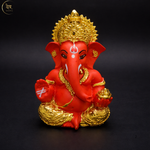
The Devi's family is often welcomed with her. This is where Dev Tattva fits in quietly. A handcrafted piece such as the gold plated crown Ganesha with base sits well on a puja shelf, and a small murti makes a thoughtful present from the gifting collection for a family starting its first home mandir.
Dev Tattva murtis are made for homes, desks and car dashboards, so a little of the festival's devotion can travel with you into everyday life, long after the garlands have dried.

Frequently Asked Questions
How do I decorate my home for Durga Puja?
Start with a clean, raised puja corner, place the Devi at the centre, and frame her with fresh flowers, a kalash with mango leaves and a coconut, and diyas. Add an alpona or rangoli at the door and a mango-leaf toran. Keep the colours red, white and gold.
Where should I place the Durga idol at home?
Choose a clean, quiet and slightly raised spot, such as a chowki or a small platform with a cloth. Many families prefer the east or north-east corner, but customs differ. Do not place the idol on the bare floor or where shoes and clutter gather.
What flowers are used for Durga Puja decoration?
Marigold and red hibiscus are the most common, and hibiscus is especially dear to the Devi in many traditions. Lotus, jasmine and white flowers are also used where available. Fresh flowers are preferred over artificial ones for the offering itself.
How do I decorate for Durga Puja in a small flat?
Choose one shelf or corner, and use a single cloth, a kalash, a few flowers and one or two diyas set safely on a steel plate. A small murti or framed picture is perfectly acceptable. A simple doorway alpona and a toran will give the whole home a festive welcome.
A Blessing Before You Go
May the Mother find your doorway swept, your lamp steady and your heart clean when she comes. Whether you build a grand corner or a single shelf, she looks at the love in the offering and not at its size.
If you are preparing your mandir for the festival, you are welcome to browse the handcrafted murtis at Dev Tattva. Jai Maa Durga.

About the author
Pandit Om Prakash Saxena
Pandit Om Prakash Saxena is 94 years old and still active. For the last 72 years he has been involved in pooja, paath and all forms of karmakand, and he is associated with Shanti Kunj, Haridwar.
-
Posted in
Devi, Durga Puja, festival traditions, home decoration, Navratri, puja corner