 All Deities
 Gift & Worship
 Best seller
 About Us
 Contact Us
 Blogs
5 Daughters of Lord Shiva: Names, Stories, Sources
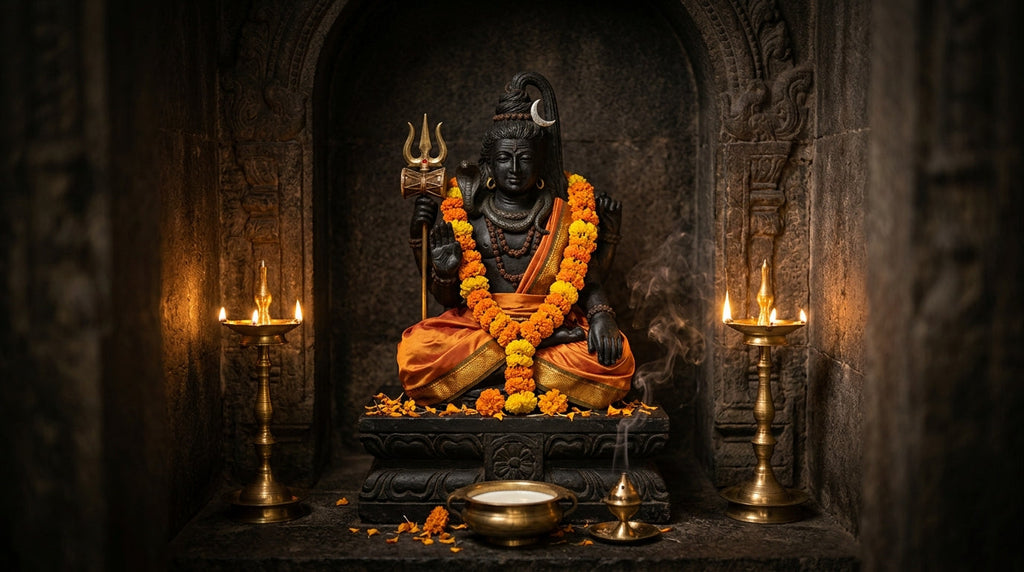
It is said that every family keeps one quiet corner of its story that the children rarely ask about. In the family of Shiva, that corner belongs to his daughters.
Here is the plain answer first. There is no single agreed list of the 5 daughters of Lord Shiva. Popular pages give two lists. One names Ashokasundari, Jyoti and Manasa, with a name or two added; the other names five snake-maidens, Jaya, Vishahara, Shamilbari, Dev and Dotli. Only Ashokasundari has a clearly cited text behind her, the Padma Purana.
So come, let us sit with these stories the way elders do. I will tell you which names rest on a Purana and which rest on the faith of villages, so that you can honour both without confusion. Dev Tattva makes handcrafted murtis for home mandirs, and the family of Shiva is a tale that every such mandir quietly holds.
Why do we hear so little of these daughters? Because the great tellings of Kailash dwell on Ganesha and Kartikeya, the two sons whom every child knows by heart. The daughters live in regional poems, village songs and the memory of grandmothers, and that is exactly why they are worth listening to slowly.
Ashokasundari: The Daughter Born of a Mother's Loneliness
Listen to how the story goes. High on Kailash, Shiva sat absorbed in meditation, and the snow-peaks held a great silence. Parvati, so the tale tells us, felt that silence deeply. In popular tellings her sons were busy with their own paths, and she longed for a daughter, a girl-child to talk with, to string flowers with, to fill the courtyard with laughter.
The Padma Purana, in its Bhumi-khanda, carries this story. Parvati went to Nandanavana, the garden of the gods, a place of scent and soft light, where the Kalpavriksha grows. This is the tree that grants wishes. Picture the air there, heavy with blossom, and a mother standing before the tree with a wish she had carried for a long time.
She shared her wish with the tree, and from it, the tradition says, a daughter came into being, bright as the blossoms around her.

Here we must be careful, as pandits always are with sources. In that Purana's telling the girl comes through Parvati's wish and the tree, and Shiva is not clearly stated as her father. Other tellings, and the devotion of many families, call her the daughter of Shiva and Parvati and say that Shiva gave her the name.
The name itself carries the meaning. Ashoka means without sorrow, and sundari means a beautiful woman. She was the one who took away sorrow, first of all her mother's.
As she grew, she came to the notice of Nahusha, a king of the lunar line, and the two were married. The same tale brings in a demon named Hunda, and the tellings differ on how his part unfolds. Their son, the tradition agrees, was Yayati, a name every reader of the Mahabharata knows. Nahusha himself is the king who, for a time, sat on Indra's throne.
Many modern retellings add long episodes to this tale. Those belong to folk tradition, and I will not hand them to you as settled fact.
Manasa Devi: The Snake Goddess of the Rain-Lands
Now let the story travel east, to Bengal and the neighbouring river-lands, where the monsoon floods the fields and snakes come looking for dry ground. Think of a farmer's hut with water lapping near the doorstep and the night loud with frogs. There people turned to a goddess who guards against serpents. She is Manasa Devi, and the old Bengali poems called the Manasa-mangal sing of her. In that regional tradition, she is the daughter of Shiva.
The poems speak of tension between Manasa and Chandi, who is described as her stepmother. Many listeners read in this a daughter who stands a little outside the warmth of the family hall and who must struggle to be recognised and worshipped. That is a reading, not a verse, but it explains why village hearts feel so close to her. She is the daughter who was not simply handed a seat.
Not every tradition agrees on her parentage. Some sources call her the daughter of the sage Kashyapa, and others the sister of a serpent king. In the Mahabharata, a woman named Jaratkaru, sister of the serpent king Vasuki, marries a sage of the same name and bears a son, Astika, who saves the serpents at King Janamejaya's snake sacrifice. Manasa is remembered under that name in her own tradition, with Astika as her son.
Vasuki, by the way, is a male serpent king and a brother, so he does not belong on any list of daughters, though a few pages put him there by mistake.
How is she worshipped? In parts of eastern India she is honoured through a branch of a plant, an earthen pot or an image of a snake, set up in a courtyard or a small shrine, with milk and flowers placed before it. It is worship of the simplest kind, close to the soil.

Notice what is missing from that worship: grand halls, loud music, costly offerings. A branch, a pot, a little milk, and a family standing with folded hands. The goddess of fear is approached with the humblest things, and that tells you a great deal about how she is loved.

Jyoti: A Flame and the Search for Her Source
Jyoti means light or flame, and hers is the hardest story to pin down. One telling says she was born from the radiance of Shiva himself. Another says she came from the forehead of Parvati. A careful writer who went looking for her in the old texts could not trace her to any, and I will say the same honestly.
In some places devotees link her with Jwalamukhi, the goddess of the sacred flame, and she is remembered in Tamil Nadu devotion as well. But these links are uncertain, and families hold them in different ways.
If a source is missing, a meaning is not. A flame in a dark room needs no argument. Some devotees like to think of her beside the shining Vel, the lance of Murugan, whom north India knows as Kartikeya, because both stand for light that cuts through darkness. That is a reflection and not a recorded story, but it is a beautiful one.

The Five Snake-Maidens and Why the Number Five Lives On
There is a second list, loved in village devotion, of five nagakanyas, the snake-maidens: Jaya, Vishahara, Shamilbari, Dev and Dotli. In this tradition they are remembered as daughters of Shiva who protect against snakebite, and they are worshipped on Nag Panchami, which falls on the fifth day of the bright half of Shravana (Sawan) in many regions.
Now I must be honest with you. I know of no reliable text that names these five. Some pages say the Shiva Purana, but they give no chapter, and careful readers say that Purana has no such list of daughters. The devotion is alive among people. The textual source is simply not shown.
Some pages go further and match the five with Saraswati, Lakshmi and Ganga. That is a modern gloss with no source behind it, so set it gently aside.
Why five, then? Nag Panchami is itself a Panchami, the fifth day. And five runs through Shiva's own worship: his five faces, called Panchanana, and the five syllables of Namah Shivaya. The elders also speak of the five great elements. These are reasons devotees give for loving the number, and they are not proof of a list.
The Two Lists of Shiva's Daughters, Side by Side
Seeing them together makes it easier to tell scripture from folk tradition.
- List one, Purana and regional tradition: Ashokasundari (Padma Purana), Manasa (Bengali Manasa-mangal and regional tradition), and Jyoti (origin uncertain, no text traced). Some writers add a fourth or fifth name, such as Ekaveera, which I could not trace to a reliable text.
- List two, the five nagakanyas: Jaya, Vishahara, Shamilbari, Dev and Dotli. This is village and folk tradition, tied to Nag Panchami, with no reliable text found.
So, to answer the question honestly: Shiva's daughters are named in tradition, but the number five is a custom of naming and not a verse of scripture. Hold each name with the label that belongs to it.
What the Daughters of Shiva Teach Us
Ashokasundari's birth teaches something tender. A mother's loneliness is not brushed aside by the gods. It is heard, and a gift arrives. Many families see in her the joy a daughter brings into a home, and that joy needs no scripture to be understood.
Manasa teaches us how fear can turn into reverence. Shiva himself wears a serpent around his neck, so the snake is no stranger in his family. Farmers who once trembled at the rustle in the grass learned to fold their hands instead, and that gentleness is the heart of her worship.
Jyoti teaches the worth of a small light. A single diya in the corner of a mandir asks for nothing, and still it changes the whole room.
And all of them together teach honesty. A good devotee can say, "This is from the Purana, and this is from my village," and love both. Faith does not have to pretend to be certain in order to be sincere.

How Devotees Honour the Daughters of Shiva Today
Devotion to these goddesses is simple and unhurried. On Nag Panchami, families clean a small corner of the home, set up an image of a snake, offer milk and flowers, and light a diya with prayers for the safety of the household. The date changes every year with the lunar calendar, so check a trusted panchang.
Many families keep this gentle and respectful. They honour the image and do not trouble real snakes. Customs differ from region to region and from house to house, and the eldest in your family is your best guide.
The month of Sawan is dear to Shiva's devotees in general. Many families offer water and bel leaves to Shiva through the month and keep the evenings quiet with a diya and a few verses. Remembering his daughters in that same season is a natural thing, a way of calling the whole household of Kailash to mind.
For Ashokasundari or Jyoti, no elaborate rite is needed. Light a diya, speak the name with a quiet heart, and place a few flowers before the picture or murti you keep.
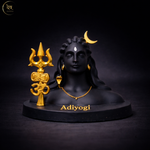
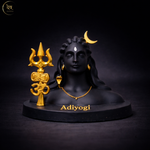
Let me also say something plainly. Daughters of Shiva are rarely carved as murtis. Most homes meet the family of Shiva through Shiva and his son Ganesha, and that is perfectly respectful. In the Shiv collection at Dev Tattva you will find handcrafted murtis such as the seated Shiv murti with trishul in black and gold and the Adiyogi Shiva idol with trishul, which sit well on a mandir shelf, a study table or a car dashboard.

As you sit before Shiva's murti, you may say the five-syllable mantra: ॐ नमः शिवाय (Om Namah Shivaya), meaning "I bow to Shiva." Many devotees remember his whole family in the same breath, sons, daughters and Parvati, and offer one flower for all.
Beside him, many homes keep Ganesha, and the Ganesh collection on devtattva.com has several handcrafted forms. A Shiva or Ganesha murti also makes a thoughtful gift for a housewarming or a wedding, because it carries a whole family's blessing in a small form. At Dev Tattva, that is the spirit in which each murti is made.

Frequently Asked Questions
Does Lord Shiva have a daughter?
Yes, in tradition. Ashokasundari appears in the Padma Purana, though that text does not clearly name Shiva as her father, and Manasa is called Shiva's daughter in Bengali regional tradition. The best-known tellings of Shiva's family focus on his sons, Ganesha and Kartikeya.
Who are the 5 daughters of Lord Shiva?
No single list is agreed. One popular list names Ashokasundari, Jyoti and Manasa with one or two more names added. Another names the five snake-maidens Jaya, Vishahara, Shamilbari, Dev and Dotli. Only Ashokasundari has a clearly cited text, so treat the rest as regional or folk tradition.
Is Manasa Devi the daughter of Shiva?
In Bengal and nearby regions, yes. The Manasa-mangal poems present her as Shiva's daughter. Other sources make her the daughter of the sage Kashyapa or the sister of a serpent king, so the answer depends on which tradition your family follows.
Are Lakshmi and Saraswati the daughters of Shiva?
Some modern pages say so, but I know of no reliable text that supports it. In the usual traditions, Lakshmi is remembered as the consort of Vishnu and Saraswati as the goddess of knowledge, and most families worship them in that way.
May Shiva and Parvati bless your home, and may every daughter in your family be cherished as Ashokasundari was cherished, with joy and with light. When you are ready to place a murti in your mandir, you are warmly welcome to visit Dev Tattva at devtattva.com. Har Har Mahadev.

About the author
Pandit Om Prakash Saxena
Pandit Om Prakash Saxena is 94 years old and still active. For the last 72 years he has been involved in pooja, paath and all forms of karmakand, and he is associated with Shanti Kunj, Haridwar.
-
Posted in
ashokasundari, daughters of shiva, manasa devi, nag panchami, shiva family