 All Deities
 Gift & Worship
 Best seller
 About Us
 Contact Us
 Blogs
BlogsWhich Divine Weapons Could Destroy All Creation?
When Gods Forged Weapons That Could Unmake the Universe
In the cosmic armory of the divine, there exist weapons so powerful that their very names make the earth tremble. These are not mere instruments of war — they are fragments of creation's own power, forged in the fires of cosmic consciousness and wielded only when the balance of dharma hangs by a thread.
The rishis who preserved these stories understood something profound: true power is not in the weapon, but in the wisdom to know when it must never be used. Each astra carries within it a lesson about restraint, responsibility, and the terrible weight of ultimate power.
The Brahmastra — Fire That Burns Beyond Time
At the summit of all divine weapons stands the Brahmastra, born from the creative force of Brahma himself. This is not merely a weapon of destruction — it is the power of cosmic dissolution made manifest. When Arjuna receives its knowledge from Dronacharya, the guru's voice carries the weight of eternity: This weapon must never be withdrawn once released, for it carries the fire that will burn until the end of time itself.
The Mahabharata tells us that the Brahmastra does not simply kill — it erases. Every blade of grass, every drop of water, every particle of earth in its path returns to the primordial void. The land becomes barren for twelve years, and even the unborn children in the wombs of mothers are touched by its terrible power.
Ashwatthama learns this truth too late. In his rage after the war's end, he releases the Brahmastra toward the Pandava lineage. But Krishna intervenes, and the weapon's power is redirected to the unborn child in Uttara's womb — the future King Parikshit, who will be born dead and brought back to life by Krishna's grace.
The Pashupatastra — Shiva's Ultimate Judgment
From the cosmic dancer comes a weapon that embodies the very principle of dissolution. The Pashupatastra is Shiva's own power made tangible — the force that will one day dance the universe back into silence. Only those who have received Shiva's direct blessing can even comprehend its existence, let alone wield it.
Arjuna obtains this weapon during his tapasya in the Himalayas, but not before Shiva tests him in the form of a hunter. The Kirata Parva tells us that when Arjuna finally recognizes the lord and receives the weapon, Shiva's words echo through the mountains: This astra contains my third eye's power — use it only when no other path remains, for it will destroy not just your enemy, but the very ground of existence beneath them.
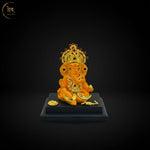
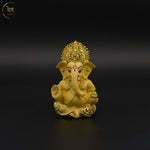
Divine Guardians for Your Sacred Space
Just as these cosmic weapons protected dharma, let these blessed murtis guard your home with their presence


The Sudarshan Chakra — Vishnu's Wheel of Time
In Vishnu's hand spins a weapon that transcends the very concept of weaponry. The Sudarshan Chakra is time itself made manifest — a spinning disc of pure consciousness that can travel faster than thought and strike across multiple dimensions simultaneously. Its name means 'auspicious vision,' for it sees through all illusion to strike only at the heart of adharma.
The Vishnu Purana reveals that this chakra was forged from the light of the sun, condensed by Vishvakarma, the divine architect. But its true power lies not in its physical form — it is the wheel of dharma itself, the cosmic principle that maintains order in the universe.
When Krishna uses it to end Shishupala's life at Yudhishthira's Rajasuya sacrifice, the chakra moves with such precision that it severs only the thread of life, leaving the body unmarked. The assembled kings watch in stunned silence as Shishupala's soul merges with Krishna — for even in destruction, the Sudarshan Chakra serves the ultimate purpose of liberation.
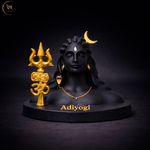
The Trishul — Shiva's Triple Power
The trident of Shiva carries within its three points the power to destroy the three fundamental impurities of existence: ego, desire, and ignorance. This is not merely a weapon — it is the very instrument through which cosmic consciousness cuts through the veils of maya.
Each point represents one aspect of Shiva's power: creation, preservation, and destruction. When raised in anger, it can pierce through the three worlds simultaneously. The Shiva Purana tells us that this trishul was present at the very beginning of creation, emerging from the cosmic sound of Om itself.
The demon Andhaka learns its terrible power when his arrogance leads him to challenge Shiva. The trishul not only destroys his physical form but burns away the very seeds of his demonic nature, ultimately transforming him into one of Shiva's devoted ganas.
The Vajra — Indra's Thunderbolt of Truth
Forged from the bones of the sage Dadhichi, who willingly gave his life so that the gods might have a weapon capable of defeating the demon Vritra, the Vajra represents the ultimate sacrifice transformed into ultimate power. It is both the hardest substance in existence and the most compassionate — for it was born from a sage's selfless love.
The Rig Veda sings of its power: Like the thunderbolt of Indra, let truth shatter all falsehood, let righteousness strike down the forces that would dim the light of dharma. When Indra wields it against Vritra, who has swallowed all the waters of the world, the vajra does not merely kill — it liberates. The waters flow free, and life returns to the earth.
The Gandiva — Arjuna's Bow of Destiny
In the hands of Arjuna, the Gandiva becomes more than a weapon — it becomes the instrument through which cosmic justice manifests on the battlefield of Kurukshetra. This bow, gifted by Agni himself, never misses its target and can fire arrows faster than the mind can conceive.
But the Gandiva's true power lies in its connection to its wielder's dharma. In Arjuna's hands, guided by Krishna's wisdom, every arrow becomes an act of cosmic restoration. The Bhagavad Gita reveals that when Arjuna finally understands his duty, the bow becomes an extension of divine will itself.
After the great war, when Arjuna's earthly mission is complete, the bow returns to the cosmic fires from which it came — for such weapons exist only as long as dharma requires their presence in the world.
The Narayanastra — The Inescapable Net
Among the most mysterious of divine weapons is the Narayanastra, which grows more powerful the more its target resists. This weapon embodies a profound spiritual truth: that which we fight against with ego and force only becomes stronger, while that which we surrender to with humility loses all power to harm us.
When Ashwatthama releases this weapon against the Pandavas, Krishna immediately commands them to drop their weapons and bow down. The blazing missiles, seeing no resistance, lose their power and fall harmlessly to the earth. Only Bhima, in his pride, continues to fight — and nearly perishes as the weapon's power increases a thousandfold against his resistance.
The Agneyastra — Fire That Burns in All Directions
Born from Agni, the god of fire, this weapon carries within it the power of cosmic combustion — the same fire that burns in the sun, in the lightning, and in the digestive fire within every living being. When released, it creates a conflagration that burns not just matter, but the very space between atoms.
The Ramayana tells us that when Lakshmana uses this weapon against Meghanada, the very air catches fire, and the battlefield becomes a preview of the cosmic dissolution that will one day consume all creation. Only weapons of equal power, or the grace of the divine, can counter its terrible heat.
The Varunastra — Waters of Cosmic Dissolution
The counterpart to the Agneyastra, this weapon of Varuna brings forth the primordial waters that existed before creation — not the gentle waters of rivers and rain, but the cosmic ocean in which all possibilities lie dormant. When released, it can flood entire worlds or create droughts that last for centuries.
Its deeper meaning lies in its connection to the unconscious mind — for Varuna is the keeper of cosmic law, the witness who sees all actions across time. The weapon represents the power of truth itself to wash away all falsehood, no matter how deeply buried.
The Vayavastra — Winds That Reshape Reality
From Vayu, the lord of wind, comes a weapon that controls the very breath of existence. This astra can create hurricanes that tear apart mountains, or it can steal the breath from every living being across vast distances. But its most subtle power is its ability to carry mantras and curses across any distance instantaneously.
The wind, after all, is the carrier of prana — the life force itself. In the hands of a master, the Vayavastra becomes a weapon that can grant life as easily as it takes it away, for it controls the very essence that animates all existence.
These ten weapons represent more than mere instruments of war — they are cosmic principles made manifest, each carrying within it a profound teaching about the nature of power, responsibility, and the delicate balance that maintains the universe. The rishis who preserved these stories understood that true strength lies not in the ability to destroy, but in the wisdom to know when destruction serves the greater good.
Today, in temples across India, devotees still chant the names of these weapons in their prayers — not seeking their destructive power, but invoking their deeper essence: the strength to cut through ignorance, the fire to burn away impurities, the wind to carry their devotion to the divine. For in the end, the greatest weapon is not one that destroys the enemy without, but one that conquers the enemy within.