 All Deities
 Gift & Worship
 Best seller
 About Us
 Contact Us
 Blogs
BlogsWhich Weapon Could Destroy All Three Worlds in Hindu Myth?
The Weapon That Made Gods Tremble
In the silence before dawn, when the first light touches the Ganga's waters, the old pandits still whisper of a weapon so terrible that its very name could split mountains. The Brahmastra — the ultimate divine weapon that carried within it the power to unmake creation itself.
This was not merely a weapon of war. It was the concentrated fury of Brahma, the creator, turned into an instrument of absolute destruction. When the Brahmastra was invoked, the very fabric of reality would begin to unravel.
The Birth of Ultimate Power
Long before the great wars that would shake the earth, Brahma sat in deep meditation upon the cosmic lotus. The universe was young, and already he could see the darkness that would one day threaten dharma itself. In that moment of divine foresight, he breathed into existence a weapon that would serve as the final guardian of cosmic order.
Brahmastra tu mahaghora sarvaloka vinashakam — the ancient texts describe it as the most terrible weapon, destroyer of all worlds.
But Brahma, in his infinite wisdom, knew that such power could not exist without restraint. He wove into the weapon's very essence a condition: it could only be wielded by those who had mastered not just the art of war, but the deeper art of self-control. The Brahmastra would respond only to a mind that understood the weight of absolute power.
The Secret That Only Gurus Could Whisper
The knowledge of the Brahmastra was never written in any book. It passed from guru to disciple in the sacred space between breath and word, in the moment when the teacher's eyes met the student's soul and found it worthy.
Dronacharya knew it. Parashurama carried its secret. Vasishtha held its power. But they shared it only with those whose hearts they had tested through years of devotion and discipline.
Young Arjuna received it from Drona after proving his unwavering focus — the same focus that could see only the eye of the wooden bird when all others saw the whole tree. Ashwatthama inherited it as his birthright, though he would later prove unworthy of such inheritance.
The weapon required no physical form. It was pure consciousness weaponized, summoned through mantra and released through will. When invoked, it would manifest as a blazing arrow of light that could pierce through any defense, destroy any army, level any city.
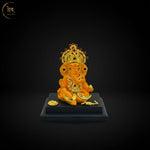
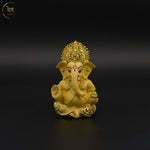
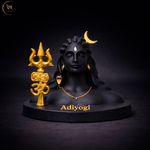
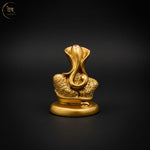
Sacred Guardians for Your Sacred Space
Just as the Brahmastra protected dharma, these blessed murtis bring divine protection to your home


When the Earth Itself Cried Out
The Mahabharata tells us of the moment when two Brahmastras nearly collided in the sky above Kurukshetra. Ashwatthama, consumed by grief and rage over his father's death, had invoked the weapon against the Pandavas. Arjuna, seeing the blazing arrow of destruction approaching, had no choice but to counter it with his own Brahmastra.
The two weapons met in the space between earth and heaven, and in that moment, creation itself held its breath. The very atoms of existence began to vibrate with the frequency of dissolution. Rivers started flowing backward. Birds fell from the sky. Pregnant women felt their unborn children tremble in the womb.
Sage Vyasa appeared between the two warriors, his face grave with the weight of what he was witnessing. Yadi etau na nivartete jagat sarva vinashyati — if these two weapons are not withdrawn, the entire universe will be destroyed.
Arjuna, master of his own power, withdrew his weapon. But Ashwatthama, untrained in the deeper mysteries of restraint, could not recall what he had unleashed. The best he could do was redirect it toward the wombs of the Pandava women, ensuring that their lineage would end.
The Weapon That Chose Its Own Master
But the Brahmastra was not the only divine weapon that walked among mortals. The texts speak of others — the Narayanastra that could summon Vishnu's own power, the Pashupatastra that carried Shiva's destructive force, the Varunastra that could flood entire kingdoms.
Yet none matched the Brahmastra's terrible completeness. Where other weapons destroyed bodies or cities, the Brahmastra could unmake the very concept of existence in the space it touched. It was not just death — it was the absence of the possibility of life.
The Ramayana tells us that even Rama, the perfect avatar, used it only once — against the ocean itself when it refused to give way for his army. And even then, when the ocean submitted and offered passage, Rama found he could not simply withdraw the weapon. Its power had to go somewhere. He turned it toward a barren region in the north, creating a desert that exists to this day.
The Price of Ultimate Power
What the ancient texts understood, and what we have forgotten, is that the greatest weapons are not those that destroy enemies, but those that transform the one who wields them. The Brahmastra demanded not just knowledge of its invocation, but wisdom about when not to use it.
Every warrior who carried its secret also carried its burden. They knew that in their hands lay the power to end not just their own story, but all stories. This knowledge changed them. It made them slower to anger, quicker to seek peaceful solutions, more aware of the preciousness of what they protected.
The weapon taught its wielders the deepest truth of power: that the greatest strength lies not in the ability to destroy, but in the wisdom to preserve.
The Living Echo of Ancient Power
Today, in the temples of South India, you can still hear the Brahmastra mantra chanted during certain rituals — not to invoke the weapon, for that knowledge died with the last of the great warriors, but to honor the memory of power held in check by wisdom.
In the Jagannath Temple of Puri, during the Rath Yatra, the priests still perform a ceremony called the 'Brahmastra Puja' — a reminder that the greatest victories are won not through destruction, but through the strength to choose restraint when destruction is within reach.
The weapon that could unmake worlds teaches us still: that true power lies not in what we can destroy, but in what we choose to protect. In a world that has forgotten the difference between strength and violence, the Brahmastra's deepest lesson echoes across the centuries — the mightiest weapon is the one that never needs to be used.