 All Deities
 Gift & Worship
 Best seller
 About Us
 Contact Us
 Blogs
BlogsWhich Divine Weapons Still Protect Us Today?
The Night the Gods Forged Lightning Into Law
In the cosmic forge of creation, when the first sparks of dharma needed form, the divine smiths did not craft mere weapons. They crystallized principles into power, justice into lightning, protection into steel that could cut through the very fabric of adharma.
These were not tools of destruction. They were instruments of cosmic order — each astra carrying within its form a fundamental truth about how the universe maintains its balance. When Arjuna receives the Brahmastra, he does not merely gain a weapon. He becomes the keeper of a sacred responsibility that burns heavier than any physical burden.
The Sudarshan Chakra — The Wheel That Never Stops
Watch Vishnu's hand as he holds the Sudarshan Chakra. It spins without friction, without pause, without the slightest tremor of doubt. This is not a weapon that strikes once and returns. This is dharma itself made manifest — relentless, precise, inevitable.
The Vishnu Purana tells us: Sudarshana chakra is the wheel of time, which cuts through all illusion and establishes truth in its wake. When Krishna raises it against Shishupala, the chakra does not simply end a life. It completes a cosmic equation that had been building for lifetimes.
In the great battle at Kurukshetra, when Bhishma's arrows rain like monsoon fury upon Arjuna, Krishna's fingers move toward the chakra. Not in anger — anger is a human limitation. In completion. The universe itself demanding that its laws be honored.
The chakra spins in four directions simultaneously, representing the four yugas, the four Vedas, the four goals of human life. It is not a weapon that destroys. It is time itself, cutting away what has served its purpose and making space for what must come next.
Bring Divine Protection Home
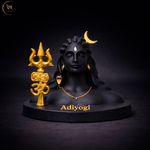
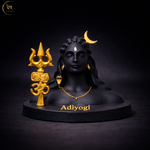
These sacred murtis carry the same protective energy that flows through the cosmic weapons of our beloved deities


The Trishul — Where Three Worlds Meet
Shiva's trident stands planted in the earth of Kailash, but its three points pierce through dimensions. Past, present, future. Creation, preservation, destruction. Rajas, tamas, sattva. This is not a weapon that strikes from outside. This is the fundamental structure of existence itself.
When Shiva dances the Tandava, the trishul moves with him — not as an instrument he carries, but as an extension of cosmic law. Each prong represents a different aspect of divine power, yet they emerge from a single handle. Unity expressing itself as trinity, then returning to unity.
The Shiva Purana reveals: The trishul is the axis upon which all creation turns, the point where the three gunas meet and dissolve into pure consciousness. When demons see it raised against them, they are not seeing their death. They are seeing the end of their illusion.
The Brahmastra — The Weight of Ultimate Power
There is a reason why the Brahmastra appears so rarely in our scriptures, why even the greatest warriors hesitate before invoking it. This is not a weapon of war. This is the creative force of Brahma himself, compressed into a form that mortal hands can barely contain.
When Ashwatthama releases it in desperate fury after Kurukshetra, he does not simply launch a projectile. He tears a hole in the fabric of dharma itself. The weapon that can unmake creation carries within it a responsibility that burns heavier than its power.
Arjuna knows this weight. When Krishna teaches him the mantra to invoke the Brahmastra, the knowledge comes with a warning that echoes through lifetimes: This power is not yours to wield in anger, but yours to carry in wisdom. The greatest strength is knowing when not to use the strength you possess.
The Gandiva — The Bow That Sings Truth
Listen to the sound of Arjuna's bow as he draws it back. That deep, resonant note that makes enemy armies pause mid-charge — that is not the sound of wood and string. That is the sound of dharma finding its voice, of cosmic justice preparing to speak.
The Gandiva was crafted by Brahma himself, blessed by all the gods, and given to Arjuna not because he was the greatest archer, but because he was the one who could carry its moral weight without breaking. Every arrow it releases carries not just Arjuna's intention, but the accumulated righteousness of his choices.
In the Mahabharata, we read: The Gandiva never misses its target because it does not aim at bodies — it aims at the heart of truth itself. When Arjuna finally lays it down after Krishna's departure, the bow becomes silent. Not broken. Silent. Waiting for another hand worthy of its song.
The Vel — Murugan's Spear of Pure Intention
In the Tamil tradition, no weapon carries more reverence than Murugan's Vel. This is not a spear that pierces flesh. This is focused intention made manifest, the power of single-pointed devotion crystallized into form.
When Parvati gives the Vel to her son, she is not arming him for battle. She is giving him the power of maternal protection concentrated into a point so sharp it can cut through the ego itself. The demon Surapadman does not die when the Vel strikes him. He is transformed — his demonic nature burned away, leaving only the divine essence that was always there.
The Skanda Purana tells us: The Vel of Murugan is the weapon of discrimination, which separates the real from the unreal with surgical precision. Every devotee who chants "Vel Vel Vetri Vel" is not calling for a weapon. They are invoking the power of clear seeing.
The Living Weapons of Today
These divine astras were never meant to remain locked in ancient stories. They live today in every moment when dharma needs defending, when truth needs speaking, when protection needs extending.
The mother who stands between her child and harm carries Durga's sword. The teacher who cuts through ignorance with patient explanation wields Saraswati's knowledge-weapon. The friend who speaks difficult truth with love holds Hanuman's mace.
In temples across India, devotees still offer prayers to these weapons — not as instruments of violence, but as symbols of the divine power that flows through righteous action. The Sudarshan Chakra spins in every act of justice. The Trishul stands in every moment of balanced judgment. The Brahmastra waits in every choice to create rather than destroy.
The weapons of the gods were never about conquest. They were about completion — the universe using whatever form necessary to maintain the delicate balance between order and chaos, between protection and destruction, between the power to harm and the wisdom to heal.
And in your own life, when you face the battles that matter most, you carry these same weapons. Not in your hands, but in your heart. Not as tools of war, but as instruments of the divine will that flows through every soul brave enough to stand for what is right.