 All Deities
 Gift & Worship
 Best seller
 About Us
 Contact Us
 Blogs
BlogsWhich Divine Weapons Still Protect Us Today?
The Moment Heaven Armed Itself
In the cosmic armory of the gods, no weapon was ever forged in anger. Each divine astra was born from necessity — when dharma needed protection, when devotees cried for help, when the very fabric of creation trembled under the weight of adharma.
The Vishnu Purana tells us: Yada yada hi dharmasya glanir bhavati bharata — whenever dharma declines, the divine manifests with its protective power. But what the scriptures do not always say is this: the weapons came first, born from the gods' love for creation itself.
Vishnu's Sudarshan Chakra — The Wheel That Never Stops
Picture this: a discus spinning with the speed of a thousand suns, its edges sharp enough to cut through time itself, yet gentle enough to rest in the palm of the one who loves all beings. This is Sudarshan — su meaning good, darshan meaning vision. The weapon that sees clearly.
The chakra was not always Vishnu's. In the beginning, it belonged to Shiva, who gifted it to Vishnu after a test of devotion that lasted for a thousand years. Vishnu had offered a thousand lotus flowers to Shiva each day, never missing once. On the final day, Shiva hid one flower. Without hesitation, Vishnu plucked out his own eye — for his eyes were called kamala, lotus-like — and placed it on the altar.
Moved by such devotion, Shiva not only restored Vishnu's eye but gave him the Sudarshan Chakra. This wheel shall be your third eye, Shiva said. It will see what needs protection and act before you even think.
The chakra has 108 serrated edges, each representing a different aspect of time. When it spins, it creates a sound — Om — that can be heard across all three worlds. Demons flee not from its sharpness, but from the purity of that sound.
Shiva's Trishul — The Fork That Holds the Universe
Three prongs. Three gunas. Three worlds. Three times — past, present, future. The trishul in Shiva's hand is not a weapon of destruction, though it can destroy. It is the instrument that maintains cosmic balance.
Each prong has a name, though few remember them now. Iccha Shakti — the power of will. Kriya Shakti — the power of action. Gyan Shakti — the power of knowledge. When all three align, creation happens. When they separate, dissolution begins.
The Shiva Purana describes how the trishul was forged from the light of Surya, cooled in the tears of Ganga, and blessed by the breath of Vayu. But the real secret is this: it was shaped by Shiva's meditation. Every curve, every angle reflects the geometry of consciousness itself.
The demon Andhaka learned this too late. When he attacked Shiva, the trishul pierced not just his body but his ignorance. In that moment of being struck, Andhaka saw clearly for the first time. He became Shiva's devotee, not his enemy.
Bring Divine Protection Home
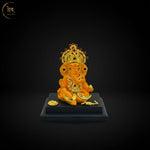
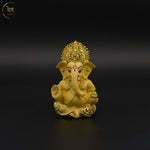
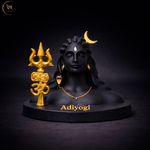
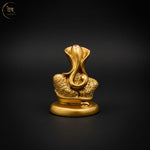
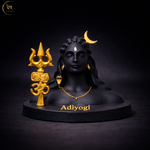
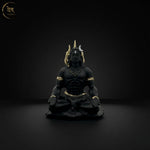
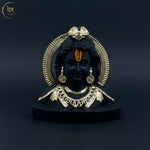
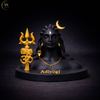
These sacred murtis carry the same protective energy that flows through the divine weapons themselves


Indra's Vajra — The Thunderbolt That Learned Compassion
Before it became a weapon, the vajra was the backbone of the sage Dadhichi. This is a story that makes even the gods weep when they remember it fully.
The demon Vritra had swallowed all the waters of the world. Rivers stopped flowing. Wells ran dry. Children cried for a single drop while their mothers had nothing to give. The gods tried every weapon in their arsenal. Nothing could pierce Vritra's hide.
Finally, Brahma revealed the truth: only a weapon made from the bones of a willing sage could defeat this demon. But which sage would give his life for the world?
Dadhichi did not hesitate. This body is temporary, he said. Let it serve something eternal. He entered deep meditation and released his prana. From his backbone, Vishvakarma forged the vajra — a weapon that carried not just the power of thunder, but the compassion of complete sacrifice.
When Indra wielded it against Vritra, the demon was defeated not by force alone, but by the purity of Dadhichi's surrender. The waters flowed again. Life returned to the world.
Even today, in Tibetan Buddhism, the vajra represents this same principle: true power comes not from hardness, but from the willingness to give everything for others.
Durga's Arsenal — When the Feminine Divine Armed Herself
No god could defeat Mahishasura. His boon protected him from all males — divine, human, or demonic. So the gods did something unprecedented: they combined their energies and created Durga, the invincible feminine force.
But she did not come empty-handed. Each god gave her his most precious weapon. Shiva gave his trishul. Vishnu gave his chakra. Indra gave his vajra. Surya gave his rays, forged into a sword. Vayu gave his bow. Varuna gave his conch.
Yet the most powerful weapon she carried was her own: the Chandrahas, the sword that laughs like the moon. It was forged from her own divine laughter — the sound of the cosmic mother who knows that all battles, in the end, are just her children playing.
When Mahishasura saw her approaching, he was not afraid of her weapons. He was afraid of her smile. In that smile, he saw his own mother, and for the first time in eons, he remembered what love felt like. His defeat was not destruction — it was homecoming.
Hanuman's Gada — The Mace That Carries a Mountain
Hanuman's mace is different from other divine weapons. It was not given to him by any god. He made it himself, from a piece of the Dronagiri mountain — the same mountain he carried to save Lakshmana's life.
The Hanuman Chalisa calls him Bajrang Bali — the one whose body is like a thunderbolt. But his mace is not about destruction. It is about service. Every time he lifts it, he remembers the weight of that mountain, the urgency of saving a life, the joy of serving Rama.
In the great battle of Lanka, when Hanuman swung his gada, demons fled not from fear of death, but from the overwhelming power of his devotion. The mace carried the fragrance of tulsi leaves from Rama's garden, the sound of Sita's prayers, the light of Rama's smile.
Even Ravana, in his final moments, admitted: I am not defeated by your strength, Hanuman. I am defeated by your love.
The Weapons We Cannot See
But the most powerful weapons of the gods are invisible. Saraswati's veena creates and destroys through sound. Lakshmi's lotus opens hearts that have been closed for lifetimes. Ganesha's ankusha — the elephant goad — removes obstacles not by force, but by showing us they were never really there.
Krishna never needed weapons. His flute was enough. When he played it, enemies forgot why they were fighting. When he smiled, wars ended before they began. The Bhagavad Gita itself is his greatest weapon — words that have been defeating ignorance for over five thousand years.
The Living Weapons of Today
These divine weapons are not museum pieces. They are alive, active, protecting devotees at this very moment. Every time you chant Om Namah Shivaya, Shiva's trishul clears the path ahead of you. Every time you remember Hanuman in trouble, his gada removes the obstacles you cannot even see.
In the temples of Tamil Nadu, priests still perform the Ayudha Puja — the worship of weapons and tools. They understand what the modern world has forgotten: every instrument becomes divine when used with the right intention. Your pen, your computer, your hands — all can become weapons of dharma.
The gods are still armed. They are still protecting. They are still fighting the battles that matter most — not the ones on ancient battlefields, but the ones in human hearts, where fear wrestles with faith, where doubt struggles with devotion, where the small self battles the eternal Self.
And in that battle, we are never alone. The weapons of the gods are always within reach — not in some distant heaven, but in the love that arms itself to protect what it cherishes most.