 All Deities
 Gift & Worship
 Best seller
 About Us
 Contact Us
 Blogs
BlogsWhich Divine Weapons Guard the Universe's Sacred Order?
The Arsenal of the Divine
In the pre-dawn hours at Kashi's ghats, when the mist rises from the Ganga like prayers made visible, the temple bells carry a sound that has echoed for millennia. Each chime reminds the faithful of something the ancient rishis knew: the gods do not carry weapons to wage war. They carry them to preserve the very fabric of existence itself.
The divine weapons of our deities are not forged in earthly fires. They are manifestations of cosmic principles — each one a concentrated form of universal energy, designed to maintain the delicate balance between creation and destruction, order and chaos, dharma and adharma.
Vishnu's Sudarshan Chakra — The Wheel of Time
When Vishnu raises his Sudarshan Chakra, time itself bends to his will. This spinning disc of pure energy moves faster than thought, cutting through illusion and ignorance with surgical precision. The word Sudarshan means 'auspicious vision' — for this weapon sees all, knows all, and strikes only what threatens the cosmic order.
In the Bhagavata Purana, we learn that the Sudarshan Chakra was born from the combined radiance of all the gods. When Vishnu hurls it, it never misses its target, never fails in its purpose, and returns to his finger like a faithful servant returning home.
The chakra has a thousand spokes, each representing a different aspect of time — past, present, future, and the eternal now that transcends all three. When devotees see this weapon in temple sculptures, they are reminded that divine justice operates beyond human understanding of time and space.
Shiva's Trishul — The Three-Pronged Truth
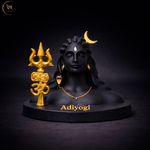
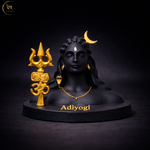
Shiva's trident pierces through the three fundamental qualities of existence — sattva, rajas, and tamas. Each prong represents a different aspect of his cosmic function: creation, preservation, and destruction. But this is not a weapon of violence. It is an instrument of transformation.
The Shiva Purana tells us that when Shiva dances his cosmic dance, the Trishul moves in perfect rhythm, maintaining the universe's heartbeat. The central prong represents the sushumna nadi — the spiritual channel through which divine energy flows in human beings.
Village grandmothers in the Himalayas still tell their children: when you see Shiva's Trishul, remember that every ending is also a beginning. The weapon that destroys ignorance is the same one that creates wisdom.
Bring Divine Protection Home
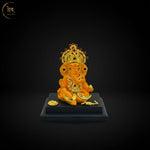
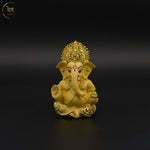
These sacred murtis carry the same protective energy that flows through the divine weapons themselves


Ganesha's Ankush — The Goad of Guidance
In Ganesha's gentle hands rests the ankush — a curved goad that appears deceptively simple. This is not a weapon of force but of guidance. Just as a mahout uses an ankush to direct an elephant with the lightest touch, Ganesha uses his to steer devotees away from obstacles and toward their highest good.
The Ganesha Purana reveals that this divine instrument can remove the most stubborn barriers — not by destroying them, but by showing them a different path. When we see Ganesha holding his ankush, we are reminded that sometimes the gentlest guidance is the most powerful force of all.
Hanuman's Gada — The Mace of Devotion
Hanuman's mace is forged from something no earthly metal can match — pure devotion crystallized into form. When he swings it, the sound echoes across all three worlds, and every demon of doubt and despair trembles.
But watch carefully how Hanuman holds his gada. Never in anger. Never in hatred. Only in service to Ram, only to protect the innocent, only to clear the path for dharma to flourish. The Hanuman Chalisa reminds us: Ram doot atulit bal dhama — the messenger of Ram, repository of immeasurable strength.
Village wrestlers in Rajasthan still touch their maces to their foreheads before training, remembering that true strength serves something greater than itself.
Durga's Arsenal — The Weapons of Shakti
When the gods faced the buffalo demon Mahishasura, they realized that no single weapon could defeat such concentrated evil. So each deity offered their most powerful weapon to the Divine Mother. Vishnu gave his chakra, Shiva his trident, Indra his thunderbolt, Agni his spear.
But in Durga's hands, these weapons became something new. They became expressions of Shakti — the primordial feminine energy that creates and protects all existence. Each of her ten hands holds a different weapon, and each weapon represents a different aspect of divine power working in perfect harmony.
The Devi Mahatmya tells us that when Durga raises her weapons, she is not preparing for battle. She is restoring balance to a universe that has forgotten its own sacred nature.
Krishna's Flute — The Weapon That Conquers Without Fighting
Of all divine weapons, perhaps the most mysterious is Krishna's flute. How can a simple bamboo instrument be considered a weapon? Ask the gopis of Vrindavan, who found their hearts completely conquered by its melody. Ask the serpent Kaliya, who was subdued not by force but by the irresistible call of divine love.
The Bhagavata Purana reveals the secret: Krishna's flute produces the sound of Om — the primordial vibration from which all creation emerges. This is a weapon that defeats enemies by transforming them into devotees, that conquers by awakening the love that was always present but forgotten.
The Deeper Truth
These divine weapons share a common purpose that transcends their individual forms. They are not instruments of destruction but of restoration. They do not create violence but end it. They do not impose order from outside but awaken the natural harmony that exists within all things.
When we see these weapons in temple art, in sacred sculptures, in the hands of our beloved deities, we are being reminded of something profound: the same divine power that maintains cosmic order also flows within us. We too carry weapons — not of metal and fire, but of truth, compassion, courage, and love.
The question is not whether we have the power to protect dharma. The question is whether we have the wisdom to use that power as the gods do — not for personal gain, but for the welfare of all beings.
In temples across India, from the Meenakshi Temple in Madurai to the Kedarnath shrine in the Himalayas, devotees still gather each evening for aarti. As the flames dance before the murtis, as the bells ring and the mantras rise, they are participating in the same cosmic battle that has raged since time began — the eternal struggle between light and darkness, truth and illusion, love and fear.
And in that moment, surrounded by the divine weapons of their beloved gods, they remember: they are not spectators in this cosmic drama. They are warriors in the army of dharma, armed with the most powerful weapons of all — faith, devotion, and the unshakeable knowledge that truth always, always prevails.