 All Deities
 Gift & Worship
 Best seller
 About Us
 Contact Us
 Blogs
Lord Ganesha: Meaning, Stories, and Daily Worship

The elders say that no prayer begins without first remembering Lord Ganesha. He is the elephant-headed Hindu deity who removes obstacles and blesses new beginnings. A new home, a wedding, the opening of a shop, the first page of a child's notebook: before anything begins, the elephant-headed lord is remembered.
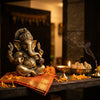
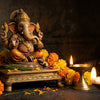
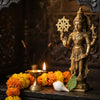
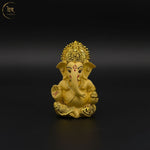
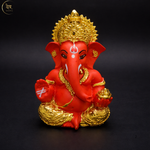
His gentle face is seen in temples, above doorways, on car dashboards, and in the small mandir at home. Dev Tattva handcrafts many Ganesha murtis, each made to carry that same auspicious presence into daily life. But who is he, really, and why does he hold this place at the very start of every work?
Let us sit together, listen to the katha, and then understand what it teaches.
The Katha: How Lord Ganesha Came to Have an Elephant Head
Listen to how the story goes. According to a widespread tradition, Mother Parvati once wished to bathe without being disturbed. From the fragrant paste of her own body, she shaped a young boy, breathed life into him, and stood him at the door with a simple order: let no one enter.
Soon Lord Shiva, her husband, returned from his wanderings in the mountains. He walked towards the chamber, and the boy stepped forward, firm as a guard, and refused him entry. Shiva, who had no idea who this child was, grew angry. In that flash of anger, he struck, and the boy fell.
When Parvati saw what had happened, her grief shook the mountain. To restore peace and life, Shiva sent his ganas out with a command: bring back the head of the first living being they met, one facing north. They returned with the head of a wise elephant. Shiva placed it upon the boy, breathed life into him again, and declared him his own son. From that day, he was Ganapati, the leader of the ganas.
In some tellings, the boy is said to have been created by both Shiva and Parvati together, and the story carries a different gentleness. But the heart remains the same: a child made of love, a mistake turned into grace, and a new beginning marked by wisdom.

Why We Call Upon Ganesha First: The Story of the Race
There is another katha the elders tell around the family lamp. When the time came to choose who among Shiva and Parvati's sons would be worshipped first, a test was set. The one who circled the whole world and returned first would win the honour.
Kartikeya, the strong and swift warrior, set off at once on his peacock, flying over rivers, forests, and mountains. Ganesha, whose vehicle was a small mouse, did not rush out. Instead, he looked at his parents. He walked slowly around Shiva and Parvati, folded his hands, and said, 'My whole world is here at your feet.'
The wise ones say that is why Ganesha is invoked first. He understood that the source of all worlds is contained in the mother and father. Pleased, Shiva and Parvati blessed him that no new work, no sacred rite, and no journey would begin without taking his name first. It is why we say ॐ गं गणपतये नमः Om Gam Ganapataye Namaha, I bow to Lord Ganesha, before anything else.

Ganesha Writes the Mahabharata
In the great epic tradition, the sage Vyasa needed a scribe who could write without faltering as he recited the Mahabharata. He asked Ganesha. The elephant-headed lord agreed, but he put forward one condition: Vyasa must recite without pause.
Vyasa, wise as he was, set his own condition in return: Ganesha must understand every verse before writing it down. And so the two worked together, verse after verse, as the great story took shape on palm leaves. When his pen broke, Ganesha did not stop. He broke off one of his own tusks and continued writing with it. That, the tradition says, is why images of Ganesha often show a single, broken tusk, and why he is honoured as the lord of learning, letters, and wisdom.

The Meaning Hidden in Ganesha's Form
Every part of Ganesha's form is a teaching, not just a decoration. His very name, Ganesha, comes from gana, meaning a group or the hosts of Shiva, and isha, meaning lord or master. So he is the Lord of the Ganas, the Lord of the Multitudes. When you sit before his murti, each detail speaks.
The elephant head is wisdom, memory, and the ability to think beyond the small self. The large ears hear the prayers of all. The small eyes see what is essential. The trunk, strong yet gentle, can lift a heavy log and pick up a single blade of grass. It reminds us to be both powerful and tender.
The modaka, the sweet dumpling he holds, is the sweetness of inner joy and the reward of steady practice. The mouse at his feet is desire, restless and quick, but when it sits near Ganesha, it becomes his vehicle. This teaches that desire must be guided by wisdom, not destroyed but directed.
The single tusk reminds us to hold on to what is essential and let go of what is not. His large belly holds both the sweetness of life and the burdens of the world without spilling over. The axe and the noose in his hands cut attachments and draw us close to the right path. If you keep a handcrafted Ganesha murti from Dev Tattva, this is why the single tusk is shown with such care, and why the mouse sits patiently at his feet.

What These Stories Teach Us
The katha of Ganesha's birth is not just about a miracle. It is a teaching about the love of a mother and the soft power of restoring what was broken. When Shiva gave the boy an elephant head, he did more than save a life; he gave the world a form of wisdom that sees beyond anger and pride.
The race story teaches that real victory is not always about speed or distance. It is about knowing what truly matters. Ganesha did not run from his parents; he turned towards them. That wisdom, the elders say, is why we pause and remember him before we begin anything new.
The Mahabharata story teaches that learning and writing are sacred work. Ganesha's single tusk became a pen so that the words of the epic would not be lost. This is why students and writers often look to him for steady focus and the willingness to give a little of themselves for the sake of greater work.
How Devotees Honour Lord Ganesha at Home, on the Desk, and on the Road
The heart of this katha is not just in the old stories. It lives in the small, everyday ways families remember Ganesha. A home mandir often has a small murti, and the day begins with lighting a diya, offering a flower, and saying the short mantra. The ritual is simple: after bathing, a family member may light a small oil lamp, place a flower or a blade of durva before the murti, and offer a piece of fruit or a modak if one is prepared. Then they close their eyes and repeat the mantra a few times. This takes only a minute or two, but it sets a calm tone for the whole day.
Many people keep a Ganesha idol on their study table or office desk, because he is believed to clear confusion and help the mind focus. Dev Tattva makes such Ganesha idols for study tables and office desk idols that fit these daily spaces with a quiet, handcrafted dignity.
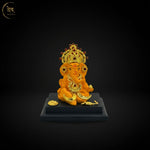
For those who drive, a small Ganesha on the car dashboard is a familiar sight in India and across the world. It is not a superstition; it is a reminder to travel with care, patience, and trust. One such piece is the Gold Plated Ganesha Car Dashboard Idol from Dev Tattva, made to sit steady on the move and carry that calm presence on every road. The wider car dashboard Ganesha idols collection offers many gentle forms for this purpose.
During Ganesh Chaturthi, families bring home a new clay or handcrafted murti, offer modaks, durva grass, and red flowers, and sing Ganapati Bappa Morya. The dates change every year, but the meaning stays the same: welcoming the remover of obstacles into the home, and then bidding him goodbye with gratitude, knowing that the blessings remain.

Frequently Asked Questions
Who is Lord Ganesha?
Lord Ganesha is the elephant-headed Hindu deity known as the remover of obstacles and the lord of beginnings. He is the son of Shiva and Parvati, though traditions differ on how he came into being. He is worshipped first before other deities and before new ventures.
How did Ganesha get an elephant head?
In the most popular telling, Parvati created him from her own body to guard her door. When Shiva was prevented from entering, he struck the boy in anger. To console Parvati and restore the child, Shiva replaced the boy's head with that of an elephant and breathed life into him again.
Why is Ganesha worshipped first before other gods?
Because Shiva and Parvati blessed him with that honour. The story of the race around the world shows his wisdom: he circled his parents, saying they were his world, and won the right to be invoked first in every ritual and new beginning.
What is the story of Ganesha writing the Mahabharata?
The sage Vyasa asked Ganesha to write down the Mahabharata as he recited it. Ganesha agreed on the condition that Vyasa never pause, while Vyasa required Ganesha to understand each verse before writing. When his pen broke, Ganesha broke off one of his own tusks and continued writing. This story explains the single tusk often seen on Ganesha murtis.


May the remover of obstacles clear your path, and may the lord of beginnings bless every new chapter in your home. When you sit before his murti, whether in your mandir, on your desk, or in your car, remember the katha: wisdom is gentle, obstacles are not final, and a new beginning is always possible. May Dev Tattva's handcrafted idols help you keep that presence close.

About the author
Pandit Om Prakash Saxena
Pandit Om Prakash Saxena is 94 years old and still active. For the last 72 years he has been involved in pooja, paath and all forms of karmakand, and he is associated with Shanti Kunj, Haridwar.
-
Posted in
ganesha, ganesha stories, ganesha symbolism, ganpati, hindu deity, lord ganesha