 All Deities
 Gift & Worship
 Best seller
 About Us
 Contact Us
 Blogs
Which God Should Be Placed at Home Entrance? And Why
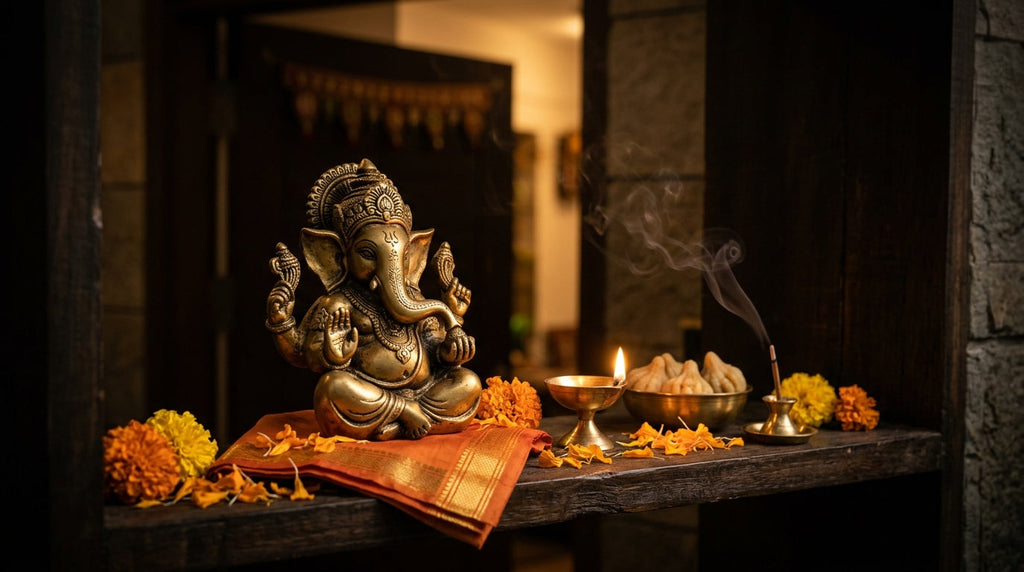
It is said that the threshold of a home is the first place where the outside world meets the inside world. When you stand at the main door, the first thing you meet is not a wall but the energy of the family. The elders ask, which god should be placed at home entrance? The answer is Lord Ganesha. He is the traditional remover of obstacles and the guardian of doorways. Many families keep a small Ganesha murti or a Ganesha photo at the entrance, facing the door or an auspicious direction. A handcrafted Ganesha murti from Dev Tattva can sit quietly on a door shelf and bring this old tradition into a modern home.
But why Ganesha? To understand, listen to the katha. It is not just a rule; it is a story of duty, love, and a son who stood at his mother's door.
The Katha: A Son Who Stood at His Mother's Door
The elders tell us that on Mount Kailash, Mata Parvati once prepared to bathe. She wanted privacy, so she created a boy from the turmeric and sandalwood paste on her own body. She breathed life into him and gave him a simple command: 'Stand at the door. Let no one enter while I bathe.' The boy bowed and stood firm at the threshold.
Soon Lord Shiva returned home and walked towards the door. The boy stepped in front of him and refused entry, because his mother's word was his law. Shiva, not knowing the boy, grew angry. The boy would not move, even when Shiva's attendants came and asked him to step aside. In that fierce moment, Shiva's trishul separated the boy's head from his body.
When Parvati came out and saw what had happened, her grief shook the mountain. To console her and restore dharma, Shiva sent his ganas to bring the head of the first living being they found. They returned with the head of a strong elephant. Shiva placed it on the boy's body and life returned. The boy became Ganesha, the elephant-faced one.
Then Shiva gave Ganesha a special place. He declared that Ganesha would be worshipped before all other gods, and that his presence at the doorway would guard every beginning. That is why to this day, a Ganesha at the entrance feels like a blessing rather than decoration.

Why Ganesha Is the God Placed at Home Entrance
Ganesha is more than a remover of obstacles. His form itself tells the story of the threshold. His large ears hear the prayers of everyone who enters. His small mouth reminds us to speak less and listen more. The trunk can lift a heavy log or pick up a tiny blade of grass, meaning that the same door should welcome all kinds of guests. The mouse at his feet is desire, and when desire is controlled, the home stays peaceful.
Because he stood at his mother's door and gave his life for his duty, Ganesha is the natural doorkeeper. In many traditional homes, the front door carries a small image of Ganesha, a swastika, or the words Shubh Labh. But the idol itself brings the strongest sense of protection and auspicious beginning. When you place Ganesha at the entrance, tradition says you are asking him to stop harsh words, unwanted disputes, and obstacles before they cross the threshold.
ॐ गं गणपतये नमः
Om Gam Ganapataye Namaha
I bow to Lord Ganesha, the remover of obstacles.

What the Doorway Story Teaches Us
The story of Parvati, Shiva, and Ganesha is not only about an idol. It teaches that the door is a place of duty. The boy at the threshold did not move because his mother asked him to stand there. In the same way, when we place Ganesha at the entrance, we are reminded to be firm in our own duties, to protect the peace of the home, and to keep the outside world from entering the inner rooms too freely.
The elephant head teaches discrimination. An elephant can walk through a dense forest and choose the right path. At the entrance, Ganesha is believed to give the family the same clarity, so that only good influences come inside. The broken tusk reminds us that sacrifice is sometimes part of duty, but no sacrifice is wasted when it is offered with love.
After this story, choosing which god to place at home entrance becomes less about a rule and more about a relationship. You are not just keeping a statue. You are inviting a guardian who already knows how to stand at the door.

Position, Posture, and Trunk Direction at the Entrance
When choosing a Ganesha murti for the door, the seated pose is most common. A seated Ganesha is calm and steady; a standing Ganesha is seen as active and is also fine for the door. The trunk is ideally curved to the left, because in common tradition the left-trunk Ganesha is associated with a cool, peaceful energy and is easier to please with daily offerings. The right-trunk Ganesha, called Siddhi Vinayaka, is equally sacred but requires stricter worship, so many families prefer the left-trunk form for the entrance.
Do not place the murti directly on the floor. Use a small wooden stool, a wall shelf, or a raised platform. Keep the murti clean and intact; a chipped or broken image should be respectfully immersed or replaced, not kept at the door. Avoid placing the murti too high where you cannot see its face, and never keep it in the bathroom, store room, or under a staircase.
If the main door faces another door, some families follow a regional practice of placing a small Ganesha on the outside wall facing the other house, but this varies. The simpler and more common practice is one Ganesha inside, facing north or east, with a clean threshold. Dev Tattva's murtis are made in sizes that fit a door shelf or alcove, so you can honour the tradition without taking up too much space.
Which God to Keep at Home Entrance for Protection and Wealth
Ganesha is the first answer, but tradition also gives us other forms for different needs. If the main door faces south or if the family feels unsettled, many devotees keep a Panchmukhi Hanuman. His five faces are said to watch all five directions, and his gada reminds us of strength and fearlessness. The story of Hanuman from the Ramayana shows him crossing the ocean, carrying the mountain, and burning Lanka, all for love of Shri Ram. At the door, he brings the same energy of protection.
For prosperity, some households keep a small image of Lakshmi or Kubera beside Ganesha. But one must be careful: the entrance is not a place for a heavy permanent Lakshmi shrine, because Lakshmi is often welcomed inside the home, near the puja space or the place of wealth. The entrance can hold a small Lakshmi charan or a coin symbol, while Ganesha remains the main door guardian. Kubera, the lord of wealth, is sometimes placed in the north direction inside the home rather than at the entrance, because the north is his direction. This keeps the energies balanced.

The Katha of Hanuman, the Watchful One
In the Ramayana, when Hanuman reached Lanka in search of Sita, he did not enter as a conqueror. He made himself small, observed, and waited for the right moment. He allowed his tail to be set on fire, and from that fire the golden city burned, but he did not lose his composure. He returned with news, not with panic. Because he watched over every direction and protected those who called him, tradition tells us that Hanuman at the entrance watches over the family in the same way: alert, strong, and devoted.
In some regional traditions, Panchmukhi Hanuman is especially kept when the door faces south or when the family wants protection from the unseen. The five faces are said to see in five directions, but the simple truth is that Hanuman's presence at the door reminds us that courage and love for Rama can guard the threshold.

How Devotees Honour the Entrance Today
In a traditional home, the entrance murti is treated with the same respect as the puja room. The shelf or niche is cleaned every morning. A small diya is lit near the door if possible, and a flower or a few grains of rice are offered. Some families keep a tiny bowl of water, changing it daily. On Tuesdays, if you keep Hanuman at the door, you may offer sindoor and a few leaves of tulsi or a small garland of marigold. On Ganesh Chaturthi, fresh modaks and durva grass are offered to the Ganesha at the door before the main puja.
The material and size of the murti matter for practical reasons. A very large, fragile idol is hard to manage at the door. A small to medium murti, neat and well-proportioned, is easier to clean and less likely to break. Broken idols are not kept, and the face should be clear and peaceful. Many families now look for handcrafted murtis that carry the traditional look in a smaller size. At Dev Tattva, the collection of Ganesha murtis is designed for these very spaces: door shelves, small niches, and even the car dashboard.
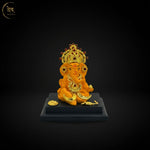
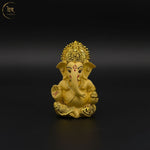
If you are setting up a home entrance, the handcrafted Ganesha idol with base is a lovely place to start. For a south-facing door, a Hanuman idol with Ram in heart pairs strength with devotion. Dev Tattva focuses on small, finely finished murtis that suit door shelves and modern apartments. These are not replacements for your family's traditional murti, but Dev Tattva offers reverent, practical options for apartments, rented homes, and small entrances. The murtis at Dev Tattva are finished with a smooth surface that is easy to clean.
Remember that the doorway is a living place. Do not let dust settle for weeks. Do not place shoes below the idol. If the door has a shoe rack, keep it at a lower side away from the deity. A small rangoli or kolam at the threshold, a fresh toran of mango leaves, and a clean floor all add to the feeling that the home is protected.


Frequently Asked Questions
Which god photo should be kept at home entrance as per Vastu?
Vastu Shastra commonly recommends Ganesha, because his presence at the door is said to remove obstacles and bring a calm beginning. You may also keep a small Swastika, Om, or Panchmukhi Hanuman, depending on your family tradition.
Should Ganesha idol face north or east?
Tradition says the Ganesha at the entrance should ideally face north or east. If your door faces another direction, place the murti on a shelf inside so its face still points north or east, and never place the idol facing south if it can be avoided.
Can we place Ganesha idol outside the main door?
Yes, many homes keep a small Ganesha relief or idol above the outer door, in a protected niche. If the weather or safety does not allow it, keep the murti just inside the entrance on a clean shelf, which is considered equally auspicious.
What is the remedy if the main door faces south?
If your main door faces south and you cannot change it, place a Ganesha murti on the inner wall facing north or east, and add a Panchmukhi Hanuman for protection. A small Swastika or Vastu symbol above the door is also used by some families. The key is to keep the entrance clean, bright, and free of clutter.
May your doorway be a place where obstacles stop, where harsh words fall away, and where every guest brings the blessings of Ganesha with them. Whether you keep a simple photo or a handcrafted murti, the feeling of the threshold changes when you honour it daily. At Dev Tattva, the sacred murtis are made to sit quietly in your home and remind you of these old stories. Choose with love, place with respect, and let the first step into your home always be auspicious.

About the author
Pandit Om Prakash Saxena
Pandit Om Prakash Saxena is 94 years old and still active. For the last 72 years he has been involved in pooja, paath and all forms of karmakand, and he is associated with Shanti Kunj, Haridwar.
-
Posted in
door deity, ganesha, hanuman, home entrance, lakshmi, vastu