 All Deities
 Gift & Worship
 Best seller
 About Us
 Contact Us
 Blogs
Markandeya: The Boy Sage Who Defeated Death
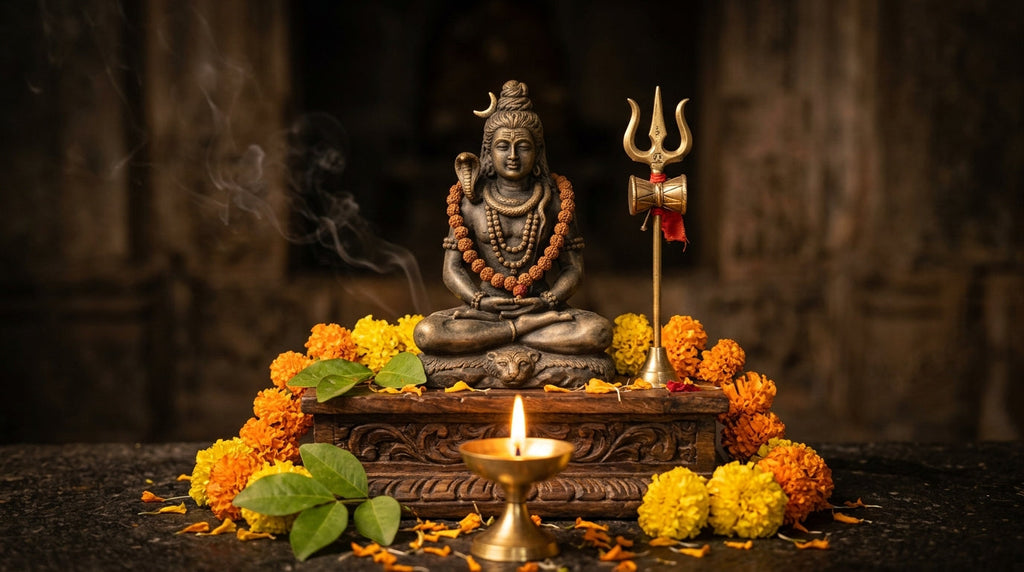
Long ago, in the ashram of sage Mrikandu, a child was born under a strange and heavy promise. The boy would be brilliant. The boy would be devoted. And the boy would die at sixteen. His name was Markandeya. Because he loved Shiva without condition, even Yama, the lord of death, could not claim him at the appointed hour. The katha tells us that Markandeya held the Shiva linga as Yama's noose fell, and Mahadeva himself intervened. That is the direct answer: Markandeya is the boy sage who became immortal through his devotion to Shiva.
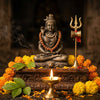
In homes across India and the diaspora, families keep this story alive. A handcrafted Shiva murti from Dev Tattva often sits in the mandir or on the study table, and the tale of Markandeya reminds us why Shiva is called मृत्युंजय (Mrityunjaya), the conqueror of death. The story is not just for children. It is a teaching about fear, time, and the power of a single-pointed heart.

Who Was Markandeya? The Boon Before Birth
Mrikandu and his wife Marudvati had no child for a long time. According to tradition, Mrikandu performed intense tapasya to please Shiva. When Shiva appeared, he offered the sage a choice. Would he accept a son who would live a long life but be ordinary and foolish? Or a son who would be brilliant, wise, and deeply devoted, but whose life would end at the age of sixteen? Some tellings say twelve years; most widely repeated tellings say sixteen. The parents chose the brilliant son.
Markandeya was born, and from a young age he showed signs of spiritual depth. He learned the Vedas and the shastras quickly. But as he grew, his parents' faces became shadowed. They did not tell him the secret, but the boy sensed their sorrow. When he finally asked, they told him the truth: his life was measured. The news did not break him. Traditions describe him as responding with calm faith, saying that if his days were fixed, he would spend every one of them at Shiva's feet.
Markandeya began a life of intense devotion. He would rise before dawn, bathe, and make a Shiva linga from earth or clay. He offered bilva leaves, water, and flowers. He chanted the five-syllable mantra: ॐ नमः शिवाय (Om Namah Shivaya – I bow to Shiva). The linga became his only shelter.
Markandeya and the Shiva Linga: The Day Yama Came
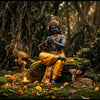
The day before his sixteenth birthday, Markandeya did not stop worshipping. As the sun rose on the appointed day, he sat before the Shiva linga, deep in prayer. His parents wept nearby, but he did not move. When the hour of death arrived, Yama himself came, riding his buffalo, carrying the noose called pasha. Yama's messengers could not approach because of the heat of the boy's tapasya, so Yama came personally.
Markandeya saw him and, according to the story, he wrapped his arms around the linga. He would not let go. Yama threw his noose. In some tellings, the noose fell around both the boy and the linga. At that moment, the linga split open, and Shiva appeared from within it.
Shiva's form was fierce. Some traditions say he came as Kalabhairava, the terrifying aspect of Mahadeva who governs time and punishes those who misuse it. In other tellings, it is simply Shiva himself, blazing with anger. Shiva struck Yama with his foot or his trishul and sent him away, or in some versions, Yama fell and was revived only after the devas intervened.
Then Shiva turned to Markandeya. You held on to me, he said in essence, so time cannot touch you. He blessed the boy with eternal youth. From that day, Markandeya remained sixteen, a chiranjivi, one who lives through the ages. Some traditions say he lives even now, moving quietly among pilgrims and sages.
In the Tamil tradition, this miracle is remembered at Thirukadaiyur, where the temple of Amritaghateswarar and Abirami is associated with the story of Markandeya. Families visit to pray for long life and to mark the sixtieth or eightieth birthday of elders.
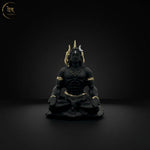
To bring this katha into daily sight, many families place a small Shiva murti on the study table or car dashboard. Dev Tattva's handcrafted Shiva idols from its Shiva collection are made for exactly these quiet spaces.

Kalabhairava and the Secret of Time
In many tellings, the form that appeared from the linga was Kalabhairava. The word काल (kala) means time, and Bhairava is the fierce one. Kalabhairava is not merely a god who fights death. He is the master of time itself. Yama, the god of death, can only take a being when their kala arrives. But Markandeya's kala was not a punishment; it was a boon his parents had chosen. By holding the linga, the boy stepped out of the small cage of measured time and into Shiva's eternal present.
Elders explain this with a simple image. A pot of water reflects the sun, and the reflection breaks when the pot breaks. But the sun itself does not break. A body is the pot, and the life that runs through it is not truly touched by death. Markandeya's devotion made him see this clearly, and Kalabhairava, being time itself, did not destroy Yama; he revealed that the boy had already gone beyond Yama's reach. Some traditions, however, keep the more direct story of Shiva kicking Yama away. Both tellings teach the same truth: death cannot claim what has already taken refuge in the imperishable.

What the Story of Markandeya Teaches Us
First, the story is about choice. Markandeya's parents chose a brilliant son even though his life would be short. Markandeya then chose how to use that short life. He did not chase pleasure or avoid pain. He turned every hour into an offering. The story asks us: if we knew our time was limited, what would we give our attention to?
Second, it is about fear. Yama is terrifying because he represents the end of the body, the unknown. Markandeya did not fight Yama with weapons. He held something still and sacred. The linga is not just a stone. It is the formless Shiva, the one who was never born and never dies. Holding it was an act of trust, not magic. The grace came because the boy had already taken shelter.
Third, it is about grace. Shiva did not change the rules of the universe to save Markandeya; he revealed a deeper rule. A devotee who has merged with the divine cannot be separated by death. Some call this moksha while living, others call it the blessing of chiranjivi. We can keep the story simply: love, when it is steady, becomes stronger than fear.
Fourth, the story points to the linga itself. The linga is worshipped because it holds no beginning and no end. Markandeya did not save himself by cleverness. He saved himself by holding a symbol of the eternal. This is why Shiva temples have a linga at the centre, and why the simplest puja at home often uses a small linga.
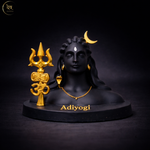
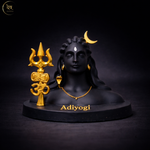
A small Shiva murti can help the mind return to this teaching. Dev Tattva's Shiv Murti Fiber Sitting Trishul is designed for desks and mandirs, so the presence of Shiva is not far away when the mind wanders.

Markandeya Purana: A Treasure of Stories and Hymns
The boy who defeated death is also remembered as a narrator. The Markandeya Purana is one of the eighteen Mahapuranas, and it is written as a dialogue between the sage Markandeya and a questioner named Jaimini. It is not a single story; it contains many kathas, including the famous Devi Mahatmya, which tells of the Goddess Durga's victory over Mahishasura. Because the text is named after Markandeya, many readers assume it tells only his story, but it is broader.
Why do some tellings say twelve and others sixteen? Elders say the number matters less than the point: before birth, a limit was set, and after grace, the limit dissolved. The difference may come from regional retellings.
Within the Purana and in later devotional traditions, the hymn Chandrashekhara Ashtakam is associated with Markandeya. The hymn addresses Shiva as Chandrashekhara, the one who wears the crescent moon, and it is sung at night, especially on Shiva-related occasions. Its verses describe Shiva's beauty and ask for protection. We will not misquote it here; the important thing is that Markandeya's name is tied to praise of Shiva even after the great miracle.

How Devotees Honour Markandeya Today
Markandeya's story is remembered in daily worship, in temple visits, and in the way families teach children about courage. Many devotees observe a simple practice on the day associated with him, reciting Shiva's names and offering bilva leaves to a linga. Some visit Thirukadaiyur in Tamil Nadu, where the main deities are Shiva and Parvati, and the temple is known for prayers for long life. Elders often mark their sixtieth or eightieth birthday there because the number sixteen in Markandeya's story points to the end of one cycle and the beginning of another.
At home, the practice can be very simple:
- Light a diya before a Shiva murti or a linga.
- Offer a few bilva leaves or white flowers.
- Sit quietly and chant ॐ नमः शिवाय (Om Namah Shivaya – I bow to Shiva).
- Recite the Mahamrityunjaya Mantra if it is part of your family practice.
Dev Tattva handcrafted murtis are made for exactly this kind of daily worship. A small Shiva idol for the car dashboard can turn a morning drive into a moment of remembrance. A Shiv Hand with Trishul idol on an office desk can be a quiet reminder of the refuge Markandeya found. And a larger Shiva murti in the home mandir can become the family's own linga of the heart.

Frequently Asked Questions
Who was Markandeya, and why is he famous?
Markandeya was a young sage, the son of Mrikandu and Marudvati. He is famous because he was destined to die at sixteen but escaped Yama by holding a Shiva linga. Shiva blessed him with eternal youth, and he is remembered as one of the chiranjivis.
Why was Markandeya destined to die at sixteen?
Before his birth, Shiva offered his parents a choice between a foolish son with a long life and a brilliant, devoted son with a short life. They chose the brilliant son, so Markandeya's lifespan was fixed. Some traditions say twelve years instead of sixteen.
How did Markandeya escape death?
When Yama came, Markandeya embraced the Shiva linga and refused to let go. In many tellings, the linga split open and Shiva or Kalabhairava appeared. Shiva stopped Yama and blessed Markandeya with immortality.
What is the Markandeya Purana about?
The Markandeya Purana is an ancient text written as a dialogue between Markandeya and Jaimini. It contains many stories, including the Devi Mahatmya, and some hymns associated with Markandeya, like the Chandrashekhara Ashtakam.
May the story of Markandeya sit in your heart. May your fears shrink, and may your devotion grow steady. Whether you place a simple linga, a handcrafted Shiva murti from Dev Tattva, or just a memory of this katha in your mind, know that the refuge is always near. Om Namah Shivaya.

About the author
Pandit Om Prakash Saxena
Pandit Om Prakash Saxena is 94 years old and still active. For the last 72 years he has been involved in pooja, paath and all forms of karmakand, and he is associated with Shanti Kunj, Haridwar.
-
Posted in
hindu mythology, kalabhairava, markandeya, markandeya purana, shiva, yama