 All Deities
 Gift & Worship
 Best seller
 About Us
 Contact Us
 Blogs
BlogsHow Powerful Is Lord Shiva? The Universe Trembles
When the Universe Holds Its Breath
There exists a moment in cosmic time when all creation pauses. The stars stop their ancient dance. The wind forgets to blow. Even Brahma, the creator himself, sits in perfect stillness. This is the moment when Shiva opens his third eye.
But to understand the true power of Mahadev, we must begin not with destruction, but with a simple question asked by a young sage thousands of years ago: "If Shiva is so powerful, why does he live like a beggar on Mount Kailash?"
The Sage Who Dared to Question
In the ashram of Rishi Kashyap, there lived a brilliant student named Upamanyu. Unlike other disciples who accepted teachings without question, Upamanyu possessed a restless mind that demanded proof. When his guru spoke of Shiva's supreme power, the young sage laughed.
"How can someone who smears ash on his body and begs for alms be more powerful than Vishnu, who maintains the entire universe? How can someone who dances in cremation grounds be greater than Brahma, who creates worlds with a single thought?"
The other students gasped at this audacity. But Rishi Kashyap smiled. "Child, your doubt is not ignorance. It is the beginning of true understanding. Go to Kailash. Ask Shiva himself."
The Mountain That Teaches Silence
Upamanyu climbed for seven days through snow that cut like knives and wind that howled like demons. When he finally reached the peak of Kailash, he found not a palace, but a simple cave. Inside sat a figure so ordinary that Upamanyu almost turned away.
Matted hair. Ash-covered skin. A tiger skin for clothing. This was the great Mahadev?
"You have come with questions," Shiva said without opening his eyes. "But first, tell me - what do you see when you look at me?"
"I see a hermit," Upamanyu replied honestly. "I see someone who has renounced the world."
Shiva smiled. "Then you see truly. Now watch what happens when someone who has renounced everything chooses to act."
The Presence That Transforms Everything
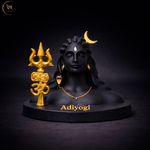
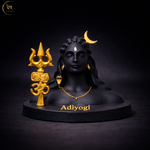
These sacred forms carry the same power that Upamanyu witnessed on Kailash - the divine presence that needs no ornament, only devotion

The Dance That Creates and Destroys
Shiva stood. The simple movement sent ripples through reality itself. "Power, young seeker, is not what you possess. It is what you choose not to use."
He began to dance. Not the elaborate performance Upamanyu expected, but something so subtle it was almost invisible. A gentle sway. A lifting of one foot. The softest movement of his hands.
The mountain began to sing. Not metaphorically - Upamanyu heard it with his own ears. The rocks hummed in harmony. The snow crystals chimed like temple bells. The very air vibrated with music that had no earthly source.
"This is Tandava," Shiva whispered, still moving in that barely perceptible rhythm. "The dance of creation and destruction. Every step births a universe. Every pause dissolves one. I am dancing now as gently as a leaf falling from a tree. Do you know what would happen if I danced with full force?"
Upamanyu could not speak. He was watching the fundamental forces of existence move through the body of someone who looked like a simple hermit.
The Third Eye Opens
But the young sage's mind, trained in logic and debate, still resisted. "This could be maya - illusion. Show me something real."
Shiva stopped dancing. The cosmic music ceased instantly. In the sudden silence, Upamanyu heard something that chilled his soul - his own heartbeat, unnaturally loud, as if the universe had become so quiet that even his pulse was an intrusion.
"You want to see real power?" Shiva asked. His voice carried no anger, only infinite sadness. "Very well."
Slowly, almost reluctantly, Shiva began to open his third eye. Not fully - just the smallest crack, like the first sliver of dawn breaking over the horizon.
Light poured out. Not the warm light of the sun or the cool light of the moon, but something else entirely. Light that was also fire. Light that was also time itself. Light that showed Upamanyu not what was, but what could be unmade.
In that terrible illumination, the young sage saw his own body beginning to dissolve. Not into death, but into the fundamental particles from which all matter springs. He was becoming unborn. Uncreated. Returning to the void that exists before existence.
"Stop!" he cried. "I understand!"
The Power of Restraint
Shiva closed his third eye instantly. Upamanyu's body solidified again, but he was forever changed. He had seen the edge of absolute power - and understood why it must never be fully unleashed.
"Now you know," Shiva said gently. "My power is not in what I can destroy. It is in what I choose to preserve. Every moment I exist, I am choosing not to end everything. Every breath you take is my gift to you."
The Shiva Purana tells us: Shiva is the consciousness that witnesses all creation and dissolution, remaining unchanged through infinite cycles of time. But the Skanda Purana adds something more intimate: He is the love that restrains itself from consuming what it adores.
The Cosmic Responsibilities
As Upamanyu sat in stunned silence, Shiva began to explain the true nature of his power. "Do you see this ash on my body? It is not decoration. It is reminder. Everything - your body, your thoughts, your proudest achievements - will become ash. I wear it so I never forget the temporary nature of all things."
"And this serpent around my neck? Vasuki represents time itself. I wear time like an ornament to show that I am beyond it. Past, present, future - all are the same to me."
"The Ganga flows from my hair because I caught her when she fell from heaven. If I had not broken her fall, her force would have shattered the earth. This is what power means - not the ability to destroy, but the responsibility to protect."
When Gods Themselves Bow
Upamanyu learned that day why even Brahma and Vishnu bow before Shiva. It was not from fear, but from recognition. They had seen what the young sage had just witnessed - power so absolute that it could only be wielded by someone who had transcended all desire to wield it.
The Mahabharata records Krishna himself saying: There is no one superior to Shiva. He is the eternal, the cause of all causes, the creator of Brahma and myself.
But perhaps the most telling moment comes in the Ramayana, when Rama - himself an avatar of Vishnu - stops his entire army to worship a Shiva lingam before the battle of Lanka. The prince who could have commanded the universe chose instead to seek Shiva's blessing.
The Paradox of Infinite Power
What Upamanyu discovered on Kailash that day was the greatest paradox of divine power: the more absolute it becomes, the more gently it must be used. Shiva's strength lies not in his ability to destroy, but in his infinite capacity for restraint.
He is called Nataraja - the cosmic dancer - because he maintains the rhythm of existence itself. Every heartbeat in every chest beats to his drum. Every planet spins to his movement. Every star is born and dies according to his choreography.
Yet he lives like the simplest of ascetics, owning nothing, wanting nothing, being everything.
The Living Power Today
This ancient story lives on in every Shiva temple across India. In Varanasi, devotees still gather at the Vishwanath Temple, knowing they stand before the same power that Upamanyu witnessed. In Kedarnath, pilgrims climb through snow and wind, following the same path of questioning that leads to understanding.
Every Monday, millions light diyas before Shiva lingams, not asking for power, but offering gratitude to the one who restrains his power so that life can continue. They pour milk and water, knowing they are honoring not just a deity, but the cosmic principle that chooses creation over destruction, moment by moment, breath by breath.
The power of Shiva is not a story from the past. It is the force that keeps the universe from dissolving into chaos right now, as you read these words. It is the love that wears the mask of indifference, the strength that appears as gentleness, the infinity that chooses to be intimate.
When we ask how powerful Lord Shiva is, we are really asking: how much love can consciousness contain? The answer, whispered in every temple bell and carried in every grain of sacred ash, is simple: enough to hold everything that exists, and gentle enough to let it all be free.