 All Deities
 Gift & Worship
 Best seller
 About Us
 Contact Us
 Blogs
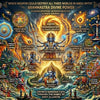
BlogsWhich Weapon Could Destroy All Three Worlds in Hindu Myth?
When Gods Forged Weapons That Could Unmake Creation
In the silence before dawn, when the first light touches the Ganga's waters, the ancient stories whisper of weapons so powerful they could reduce the three worlds to ash. Not swords of metal or arrows of wood — but instruments of cosmic force that carried within them the very breath of creation and destruction.
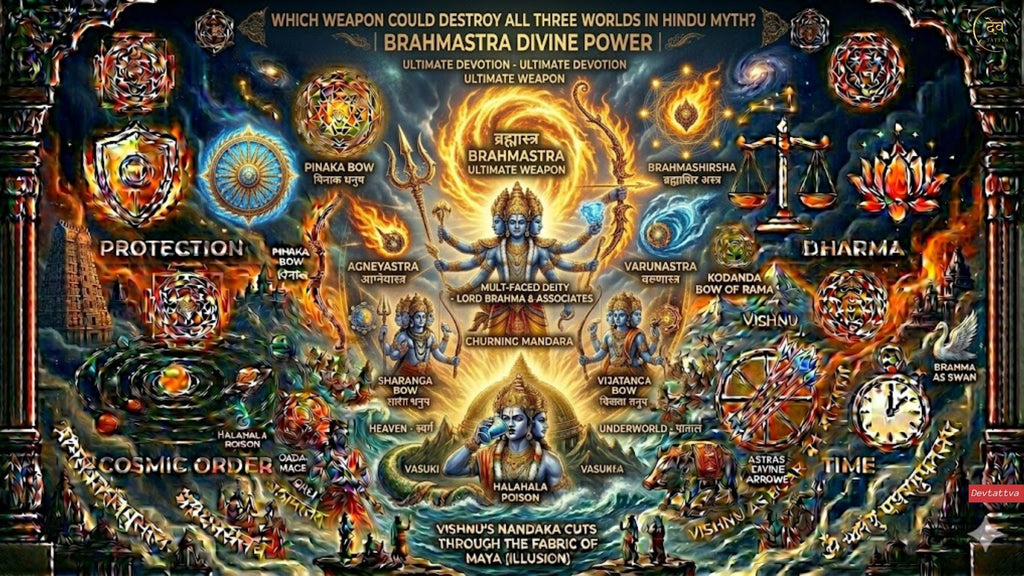
The most feared among these was the Brahmastra — a weapon that did not merely kill, but erased. It left no trace, no memory, no possibility of return. Even its name carries the weight of the absolute: Brahma, the creator, and astra, the weapon. A tool that held the power of the one who made all things.
The Weight of Ultimate Knowledge
But here lies the first mystery that the Puranas teach us: the most powerful weapon was also the most reluctant to be used. The Brahmastra demanded something no other weapon required — complete purity of intent, absolute knowledge of consequence, and the terrible wisdom to know when even ultimate power must be restrained.
Dronacharya, the greatest teacher of weapons in the Mahabharata, knew its secret. So did Arjuna, Ashwatthama, and a handful of others across the ages. Yet in all the great wars, in all the cosmic battles that shook the foundations of dharma, this weapon appeared only when the very fabric of existence hung in balance.
The Mahabharata tells us: Brahmastra is not merely a weapon of war, but a test of the soul that wields it. For once invoked, it could not be recalled. Once released, it would find its target even if that target was the wielder's own heart.
The Hierarchy of Divine Destruction
Yet the Brahmastra was not alone in the cosmic armory. The ancient texts speak of weapons arranged like a celestial hierarchy, each more terrible than the last:
The Agneyastra carried the fire of Agni himself — flames that could burn underwater, flames that consumed not just flesh but karma itself. Arjuna wielded it in the Kurukshetra war, and the battlefield became a furnace where even the wind caught fire.
The Varunastra brought the fury of all oceans in a single strike. When Indrajit used it against Hanuman, the very air became water, and breathing became drowning. Only another divine weapon could counter its deluge.
The Vayavastra summoned hurricanes that could uproot mountains. The Narayanastra multiplied with the enemy's resistance — the more one fought it, the more deadly it became. Only complete surrender could neutralize its power.
But above them all stood the Brahmashirsha Astra — four times more powerful than the Brahmastra itself. The Puranas whisper that this weapon was never used, for its very existence was enough to maintain cosmic balance. The knowledge that it could be used was more powerful than its use.
Sacred Guardians for Your Spiritual Journey
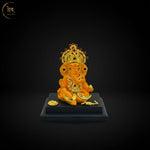
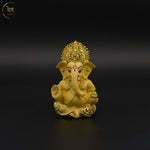
Just as divine weapons protected dharma, these blessed murtis guard your home with their presence


The Moment When Power Chose Restraint

The most profound teaching about ultimate weapons comes not from their use, but from their restraint. In the final moments of the Kurukshetra war, when Ashwatthama and Arjuna both invoke the Brahmastra in grief and rage, something unprecedented happens.
Two weapons of absolute destruction hurtle toward each other. The collision would not merely end the war — it would end the world. The earth begins to crack. The oceans start to boil. Even the gods in their celestial realms feel the tremor of approaching annihilation.
Then Vyasa arrives. Not with another weapon, but with a single word: Stop.
And here the deepest mystery reveals itself. Arjuna, master of all weapons, student of Krishna himself, recalls his Brahmastra. He pulls back the ultimate power because he understands something greater than victory: responsibility.
Ashwatthama cannot. His rage has consumed his wisdom. His Brahmastra continues its path, but Vyasa redirects it toward the unborn child in Uttara's womb — the future King Parikshit. Even then, Krishna's grace protects the child, and the weapon that could destroy worlds becomes instead a blessing that makes the child immune to all weapons.
The Trishul — Shiva's Instrument of Cosmic Balance

But if we speak of the most powerful weapon in all of Hindu mythology, we must turn our gaze to something that transcends even the Brahmastra: Shiva's Trishul.
This is not merely a weapon of war. It is the instrument through which the cosmic dance of creation, preservation, and destruction maintains its eternal rhythm. The three prongs represent the three gunas, the three worlds, the three aspects of time itself.
When Shiva raises the Trishul, he does not aim at an enemy. He aims at imbalance itself. The weapon that can pierce through the illusion of separateness, the delusion of permanence, the ignorance that makes souls forget their divine nature.
The Shiva Purana reveals: The Trishul is not held by Shiva — Shiva is held by the Trishul. For he who wields the power of ultimate transformation must himself be transformed by it.
Weapons That Chose Their Wielders
Here lies another profound truth the ancient stories carry: the most powerful weapons were not tools to be mastered, but forces that chose their own masters. The Brahmastra would not respond to mere technical knowledge. It demanded purity. The Trishul could not be lifted by strength alone. It required surrender.
Rama's bow, Vishnu's Sudarshan Chakra, Indra's Vajra — each of these weapons carried consciousness. They were not objects but relationships. The wielder did not possess them; they possessed the wielder, transforming him into a vessel worthy of their power.
A young fisherman's daughter once asked her grandmother: "Why did the gods need weapons if they were already all-powerful?" The old woman smiled and said, "Child, the weapons were not for the gods. They were for us — to teach us that true power comes not from what we can destroy, but from what we choose to protect."
The Living Tradition of Divine Protection
Even today, in temples across India, you will find these weapons carved in stone, cast in bronze, painted in vibrant colors on walls where oil lamps flicker. The Trishul stands guard at Shiva temples. The Sudarshan Chakra spins eternally above Vishnu's sanctum. Hanuman carries his mace, ready to defend dharma.
These are not museum pieces. They are living symbols of a truth that transcends time: that the greatest power is not the ability to destroy, but the wisdom to know when destruction serves creation, when endings serve beginnings, when the ultimate weapon is the choice not to use it.
In the end, the most powerful weapon in Hindu mythology is not the Brahmastra or the Trishul or any instrument of cosmic force. It is viveka — the discrimination between what can be done and what should be done. The wisdom that knows when to act and when to refrain. The understanding that true victory is not over enemies, but over the ignorance within oneself.
For in the deepest teaching of our tradition, every soul carries within itself a weapon more powerful than any the gods ever forged: the capacity to choose love over fear, dharma over desire, wisdom over mere knowledge. And that weapon, once awakened, can indeed transform all three worlds — not by destroying them, but by revealing the divine light that was always there, waiting to be seen.